A peaceful night’s sleep is invaluable, yet often elusive, especially when battling warm temperatures. While a fan can provide much-needed relief, a noisy one can quickly turn comfort into irritation, disrupting your rest with its constant hum or rattle. The quest for a truly quiet electric fan has become a priority for many, transforming bedrooms into serene havens of cool, gentle breezes.
This comprehensive guide delves into the world of quiet electric fans, exploring the types available, the technology behind their hushed operation, and the essential features that make them ideal for sleeping. We’ll unveil the top five models renowned for their whisper-quiet performance, offer a detailed comparison, and provide a practical buying guide to help you select the perfect fan to achieve restful, cool nights without the unwanted noise. Prepare to discover how to banish restless nights and welcome a refreshing, undisturbed slumber.
Common Types of Electric Fans
Understanding the different types of electric fans helps in choosing one that best fits your space and cooling needs, especially when prioritizing quiet operation for a bedroom setting.
Table Fans
Table fans are compact and designed for personal use, making them perfect for desks, nightstands, or small areas. They typically offer focused airflow, and while generally smaller, many modern designs incorporate quiet technologies to ensure they don’t disturb your concentration or sleep. Their portability allows for flexible placement, bringing a cooling breeze exactly where it’s needed most.
Tower Fans
Tall and slender, tower fans are celebrated for their space-saving design and wide oscillation range, effectively circulating air throughout larger rooms without taking up much floor space. Many high-quality tower fans feature DC motors and specialized blade designs, contributing to significantly quieter operation compared to their traditional counterparts, making them a popular choice for bedrooms and living areas.
Pedestal Fans
Pedestal fans, also known as standing fans, offer adjustable height and powerful airflow, making them versatile for various room sizes. Their height adjustability allows you to direct air over beds or furniture, and many models now incorporate advanced motor technologies and aerodynamic blades to minimize noise, delivering robust cooling without a distracting racket.
Air Circulators
Unlike traditional fans that primarily blow air in a straight line, air circulators are designed to move air around an entire room, creating a consistent temperature throughout. While often more powerful, many advanced air circulators are engineered for quiet performance even at higher settings, making them effective for maintaining comfort in larger bedrooms or open-plan living spaces.
Ceiling Fans
Ceiling fans are a permanent fixture, offering excellent air circulation for an entire room. They are generally very quiet, especially on lower settings, and can complement air conditioning by distributing cool air more efficiently. Their overhead placement means they don’t occupy floor space, providing consistent ambient cooling that is often unobtrusive to sleep.
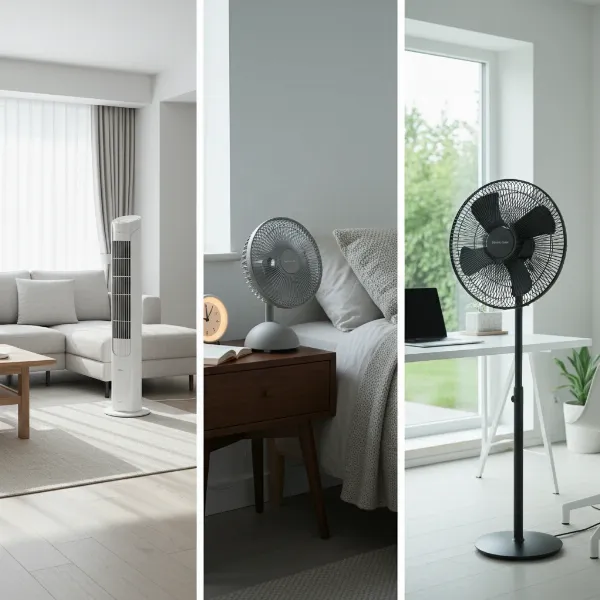 Various quiet electric fan types, including tower, pedestal, and table fans, cooling a modern home.
Why Quiet Matters: Understanding Fan Noise
The impact of noise on sleep quality is profound. Even low-level background noise can disrupt sleep cycles, leading to shallower sleep and waking up feeling unrested. This is where the concept of “quiet” becomes critical when selecting a fan.
Fan noise is typically measured in decibels (dB). For comparison, a whisper is around 30 dB, and normal conversation is about 60 dB. For an undisturbed night’s sleep, experts generally recommend noise levels below 35 dB, with many finding anything above 40 dB noticeable and potentially disruptive. Truly quiet fans often boast operating noise levels as low as 13-20 dB on their lowest settings.
Several factors influence a fan’s noise output:
- Motor Type: Fans equipped with DC (Direct Current) motors are significantly quieter and more energy-efficient than traditional AC (Alternating Current) motors. DC motors allow for a wider range of speed settings and more precise control, often translating to smoother, less audible operation.
- Blade Design: Aerodynamically designed blades minimize air resistance and turbulence, reducing the whooshing sound typically associated with fan operation. Bladeless designs, like those from Dyson, move air differently, often resulting in a smoother, less choppy airflow that can be perceived as quieter.
- Construction and Materials: A sturdy build with high-quality materials, along with well-balanced components, helps to prevent rattling or vibrations that contribute to noise. Fans with solid bases and good internal damping can significantly reduce operational sounds.
- Speed Settings: Naturally, a fan will be quieter on its lower speed settings. High-quality quiet fans are designed to still provide effective airflow even at these low, sleep-friendly speeds.
Choosing a fan with these considerations in mind ensures that you’re investing in true tranquility, not just a breeze.
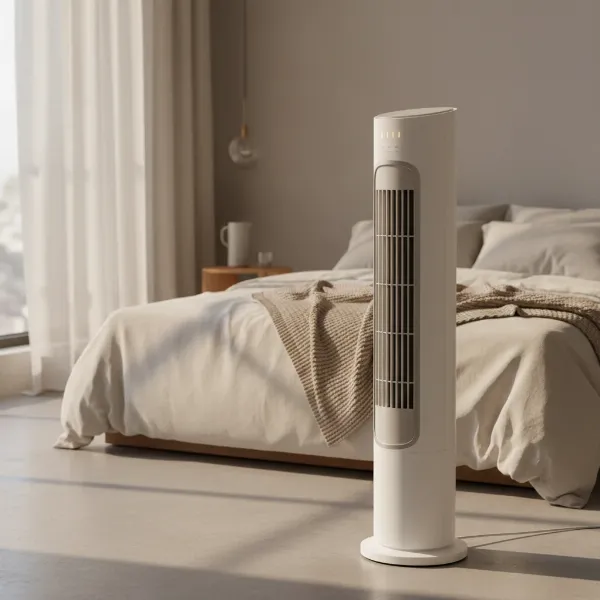 A modern, quiet electric fan provides a gentle breeze in a serene bedroom for restful sleep.
Top 5 Quietest Electric Fans for Undisturbed Sleep
When the goal is truly undisturbed sleep, certain electric fans rise above the rest, delivering powerful cooling with minimal noise. Here are five top contenders that excel in quiet operation, making them perfect for bedrooms.
1. Duux Whisper Flex Ultimate Fan
The Duux Whisper Flex Ultimate Fan is often hailed as one of the quietest fans available, making it an ideal choice for the bedroom. On its lowest settings, it operates at a virtually silent 13 dB, gradually increasing to 50 dB at its most powerful. This pedestal-style fan boasts an impressive 30 speed settings, offering precise control over airflow. Its multi-directional oscillation, with 105° vertical and 90° horizontal swing, ensures comprehensive air circulation. Additional features include a timer, a “natural wind” mode that mimics a gentle breeze, a dedicated night mode, and smart functionality via WiFi. It also comes with a rechargeable battery for cordless operation and adjustable height for versatile placement. The Duux Whisper Flex Ultimate Fan is a premium investment that delivers exceptional quietness and energy efficiency, consuming only 3-32W of power.
2. Levoit Classic 36-Inch Tower Fan
Certified ultra-quiet by QuietMark, the Levoit Classic 36-Inch Tower Fan is another excellent option for those prioritizing silence. It operates at a low noise level of 25-28 dB, ensuring a peaceful sleep environment. This tower fan features an advanced sleep mode that intelligently turns off display lights and slowly adjusts the fan speed based on your sleep stages, promoting uninterrupted rest. With 90° oscillation and temperature-responsive capabilities, it automatically adjusts its speed to maintain optimal room comfort. Its straightforward design allows for easy assembly and cleaning, making maintenance a breeze. Despite its quiet performance, it delivers effective airflow, proving that quietness doesn’t compromise cooling power.
3. Dreo Polyfan 508s
The Dreo Polyfan 508s is a sophisticated pedestal fan designed for both efficiency and quietness. It features a DC motor that contributes to its low noise levels, registering as low as 20 dB in Night mode and under 45 dB during regular operation. This fan offers deep customization with nine speed settings, multiple modes (Normal, Turbo, Auto, Sleep, Natural), and omnidirectional oscillation (120° horizontal and 120° vertical) to circulate air up to 85 feet. Its energy-efficient design means it uses as little as 3W in Night mode, making it cost-effective for continuous use. Smart features include app and voice controls (Alexa and and Google Assistant), an LED halo light for mood lighting, a child lock, and compatibility with air conditioning systems.
4. MeacoFan 1056 Air Circulator
The MeacoFan 1056 Air Circulator is recognized for its powerful yet almost silent airflow. Operating between 20-60 dB, this air circulator utilizes a DC motor to deliver substantial cooling without the intrusive drone often associated with powerful fans. It offers 12 speed settings and combined multi-directional oscillation (60° vertical and 80° horizontal) to circulate air efficiently throughout an entire room. Key features include an ECO mode that adjusts fan speed based on room temperature, a timer, and a convenient remote control. The MeacoFan 1056 is energy-efficient, using only 9.5-23.5W of power, and comes fully assembled, offering ease of use straight out of the box.
5. PELONIS Silent Turbo Pedestal Fan
The PELONIS Silent Turbo Pedestal Fan is designed with light sleepers and nurseries in mind, offering ultra-quiet performance where noise levels are “nearly undetectable.” This pedestal fan comes with 12 speeds and four operation modes, including a specific “sleep” mode that gradually slows the fan for a gentle, undisturbed breeze. It features a remote control, a sturdy base, and an adjustable timer from 30 minutes to 12 hours for personalized comfort. A memory recall function ensures it remembers your last used settings, adding to its user-friendliness. While it might not boast the raw power of some industrial fans, its unwavering commitment to quiet operation makes it an excellent choice for peaceful cooling.
Comparison Table: Quietest Fans at a Glance
| Fan Model | Type | Noise Level (dB) | Key Quiet Features | Notable Features |
|---|---|---|---|---|
| Duux Whisper Flex Ultimate Fan | Pedestal | 13-50 | “Virtually silent” on low settings, DC motor | 30 speeds, multi-directional oscillation, natural wind, night mode, cordless (battery) |
| Levoit Classic 36-Inch Tower Fan | Tower | 25-28 | QuietMark certified, Advanced Sleep Mode | Temperature-responsive, 90° oscillation, auto mode, easy clean |
| Dreo Polyfan 508s | Pedestal | 20-42 | Low as 20 dB in Night mode, DC motor | 9 speeds, omnidirectional oscillation, smart controls (app/voice), LED light, ECO mode |
| MeacoFan 1056 Air Circulator | Air Circulator | 20-60 | “Almost silently,” DC motor | 12 speeds, multi-directional oscillation, ECO mode, no assembly |
| PELONIS Silent Turbo Pedestal Fan | Pedestal | “Nearly undetectable” | Ultra-quiet performance, dedicated sleep mode | 12 speeds, 4 modes, timer (up to 12h), memory recall, remote control |
Note: Noise levels can vary depending on the speed setting and environment. “Nearly undetectable” is a qualitative assessment from reviews.
Essential Features to Look for in a Quiet Fan
Choosing the right quiet fan goes beyond just low decibels. Several features contribute to a fan’s overall effectiveness and its ability to provide a truly restful environment.
Noise Level (dB)
This is paramount. Look for models explicitly stating low decibel ratings, especially for their lowest speed settings. Anything below 35 dB is generally considered good for sleep, with premium models offering 20 dB or lower.
Sleep Modes
Many quiet fans include a dedicated “sleep” or “night” mode. These modes often reduce the fan speed to its quietest setting, dim or turn off display lights, and may even gradually decrease airflow throughout the night to match your body’s natural cooling needs.
DC Motors
Fans with DC (Direct Current) motors are generally quieter and more energy-efficient than those with traditional AC motors. They offer a wider range of speed settings and smoother, more consistent operation, minimizing mechanical noise.
Oscillation
Smooth and consistent oscillation helps distribute cool air evenly across the room, preventing a concentrated blast of air that can be uncomfortable. Look for fans with wide oscillation angles and mechanisms that operate silently, without squeaking or jerking.
Timer & Remote Control
A timer function allows you to set the fan to turn off automatically after a certain period, conserving energy and preventing you from getting too cold during the latter part of your sleep. A remote control offers the convenience of adjusting settings from your bed without having to get up.
Smart Features/App Control
Modern quiet fans often integrate with smart home systems, allowing you to control them via smartphone apps or voice assistants like Alexa or Google Assistant. These features offer advanced scheduling, precise speed adjustments, and even temperature-based automation for ultimate comfort.
Energy Efficiency
While fans are generally less energy-intensive than air conditioners, an energy-efficient model (often indicated by lower wattage or the presence of a DC motor) will save on electricity bills, especially if you use it nightly for extended periods.
Ease of Cleaning
Dust buildup on fan blades and grilles can reduce efficiency and even lead to increased noise. Look for fans that are easy to disassemble and clean, ensuring consistent performance and optimal air quality.
Buying Guide: Choosing Your Ideal Quiet Fan
Navigating the market for the perfect quiet fan can feel overwhelming. By considering a few key factors, you can narrow down your options and make an informed decision.
1. Assess Room Size and Placement
Consider where the fan will be used. A small desk fan might be perfect for a bedside table, while a tower or pedestal fan with wide oscillation is better suited for cooling an entire bedroom. Measure your room to ensure the fan’s airflow capacity matches your needs. An air circulator can be excellent for larger spaces where consistent temperature throughout the room is desired.
2. Set Your Budget
Quiet, high-performance fans, especially those with DC motors and smart features, tend to be more expensive upfront. However, their energy efficiency and durability can offer long-term savings. Determine how much you’re willing to invest, weighing the initial cost against the benefits of quiet operation and advanced features.
3. Read Reviews and Ratings
User reviews provide invaluable insights into a fan’s real-world quietness and performance. Look for mentions of noise levels, effectiveness in bedrooms, and satisfaction with features like sleep modes. Certifications like QuietMark can also be a strong indicator of a fan’s low noise output.
4. Consider Brand Reputation
Established brands often have a track record of producing reliable and innovative cooling solutions. Brands frequently highlighted for quiet fans, such as Duux, Dreo, Levoit, Meaco, and PELONIS, typically invest in research and development to deliver advanced motor and blade technologies.
5. Warranty and Customer Support
A good warranty provides peace of mind, protecting your investment against manufacturing defects. Check the manufacturer’s warranty period and customer support reputation to ensure you’ll receive assistance if any issues arise.
Tips for Using and Maintaining Your Quiet Fan
To ensure your quiet fan continues to provide optimal, serene cooling for years to come, proper usage and maintenance are essential.
Keep It Clean
Dust and debris can accumulate on fan blades and within grilles, reducing efficiency and potentially increasing noise levels. Regularly clean your fan according to the manufacturer’s instructions. For many fans, this involves simply wiping down surfaces or removing grilles for a deeper clean. A clean fan moves air more effectively and quietly.
Optimal Placement
Positioning your fan strategically can maximize its cooling effect. For personal cooling, place it near your bed or desk. For whole-room circulation, consider placing it to encourage cross-ventilation, perhaps near a window to draw in cooler night air, or in a corner to bounce air off walls. Ensure the fan is on a stable, flat surface to prevent vibrations or wobbling that could create noise.
Storing the Fan
If you won’t be using your fan for an extended period, especially during colder months, clean it thoroughly and store it in a dry, dust-free place. Using its original packaging or a protective cover can prevent dust buildup and potential damage during storage.
Troubleshooting Common Issues
While quiet fans are designed for reliability, occasional issues might arise. If your fan suddenly becomes noisy, check for loose parts, obstructions in the grille or blades, or excessive dust. Consult your user manual for specific troubleshooting steps or contact customer support if the problem persists. Often, a simple cleaning or tightening of a screw can restore its quiet operation.
Top Popular Quiet Fan Brands
Several brands consistently deliver high-quality, quiet fans that are perfect for enhancing sleep environments:
- Dreo: Known for its innovative tower and pedestal fans featuring TurboSilent technology and DC motors, offering powerful airflow at low noise levels, often with smart capabilities.
- Duux: A European brand celebrated for its elegant designs and exceptionally quiet operation, particularly with their Whisper series, which often includes cordless options.
- Levoit: Offers a range of tower and air purifier fans that are frequently QuietMark certified, emphasizing ultra-quiet performance and smart features like advanced sleep modes.
- Meaco: Specializes in air circulators and fans designed for powerful, energy-efficient, and quiet performance, often employing DC motors and multi-directional oscillation.
- PELONIS: Provides a variety of fans, with some models specifically highlighted for their “silent turbo” technology, ensuring nearly undetectable noise levels suitable for even the lightest sleepers.
These brands are committed to integrating advanced technologies to create cooling solutions that prioritize tranquility.
Conclusion
Investing in a quiet electric fan is an investment in your well-being, transforming restless, hot nights into serene, comfortable sleep. From the virtually silent operation of the Duux Whisper Flex Ultimate to the smart, energy-efficient cooling of the Dreo Polyfan 508s, the market offers exceptional choices for every need. By understanding the importance of low decibel levels, recognizing the benefits of DC motors and sleep modes, and following a thoughtful buying guide, you can confidently select a fan that provides the perfect, quiet breeze.
Are you ready to experience the profound difference a truly quiet fan can make to your nightly rest?
Frequently Asked Questions
What is considered a “quiet” fan for sleeping?
For sleeping, a fan is generally considered quiet if its noise level is below 35 decibels (dB). Many top-performing quiet fans operate at 20 dB or even lower on their lowest settings, ensuring an undisturbed night.
Are bladeless fans inherently quieter than traditional fans?
Bladeless fans, like those from Dyson, often produce a smoother, less turbulent airflow compared to traditional fans with exposed blades. While not always absolutely quieter in terms of raw decibel numbers, many users perceive their sound profile as less disruptive and more conducive to sleep due to the absence of choppy air and mechanical blade noise.
How does a DC motor contribute to a fan’s quietness?
DC (Direct Current) motors are more energy-efficient and offer a wider range of speed adjustments compared to traditional AC motors. Their design inherently produces less friction and vibration, resulting in significantly quieter operation and a smoother, more consistent airflow.
Can a quiet fan still provide strong airflow?
Yes, absolutely. Modern quiet fans, especially those with advanced DC motors and aerodynamic blade designs, are engineered to deliver powerful and effective cooling even at low, quiet speed settings. Many air circulators, while quiet, are specifically designed to move air throughout an entire room efficiently.
What is a “sleep mode” on an electric fan?
A sleep mode, or night mode, is a specialized setting designed to promote undisturbed sleep. It typically reduces the fan to its quietest speed, dims or turns off display lights to eliminate light pollution, and may even feature a gradual reduction in fan speed over time to match your body’s natural cooling needs during sleep.
How often should I clean my quiet fan to maintain its performance?
To maintain optimal performance and quiet operation, it’s recommended to clean your fan regularly, ideally once a month for light use or more frequently if it’s used daily or in dusty environments. Dust buildup can reduce efficiency and increase noise, so a quick wipe-down or a deeper clean of removable parts is beneficial.
Is it worth paying more for a quiet fan?
For those sensitive to noise, especially during sleep, investing in a higher-priced quiet fan is often worth it. These fans typically feature advanced DC motors, superior build quality, and specialized designs that result in significantly lower noise levels, better energy efficiency, and a more comfortable sleep environment. The long-term benefits of improved sleep quality and lower running costs can outweigh the initial investment.