It’s a common misconception: we turn on an electric fan, and instantly, the room feels cooler. But what if we told you that your fan isn’t actually lowering the ambient temperature of your space? This seemingly magical relief is, in fact, a sophisticated interplay of physics and biology, a testament to the powerful “wind chill” effect that targets your body’s natural cooling mechanisms. Understanding this science allows us to harness the true power of electric fans for optimal comfort and energy efficiency.
Understanding the Fundamentals of Cooling
Our bodies are constantly generating heat, a byproduct of metabolic processes. To maintain a stable internal temperature, we need to dissipate this heat to our surroundings. This heat transfer occurs through several fundamental principles: conduction, convection, radiation, and evaporation. While a fan influences all of these to varying degrees, its primary role in cooling you down lies in enhancing two key processes: convection and, most significantly, the accelerated evaporation of sweat.
The Evaporative Cooling Mechanism: The Core of Wind Chill
The most powerful way an electric fan makes you feel cooler is by boosting evaporative cooling, which is the direct application of the wind chill effect to the human body. When your body gets warm, it produces sweat. Sweat is essentially water secreted onto your skin. As this sweat evaporates, it undergoes a phase change from liquid to gas. This process requires energy, known as latent heat, which it draws directly from your skin, leading to a cooling sensation.
An electric fan accelerates this natural process dramatically. In still air, a thin layer of humid air quickly builds up around your skin, slowing down further evaporation. A fan’s moving air constantly sweeps away this saturated air, replacing it with drier air, allowing sweat to evaporate much more quickly. The faster the air moves, the more rapid the evaporation, and thus, the greater the cooling effect you perceive. This intensified heat loss due to moving air is precisely what we refer to as the wind chill effect.
“Fans don’t cool the air; they cool people by increasing the rate of sweat evaporation from the skin.” – Dr. Alex Thorne, Environmental Physicist
Convection: Clearing the Warm Air Boundary
Beyond accelerating evaporation, electric fans also play a crucial role in convective heat transfer. Our bodies continuously radiate heat into the immediate surrounding air. This creates a thin, insulating “boundary layer” of warmer air that clings to our skin. In still conditions, this warm air layer can reduce the efficiency of heat loss.
When an electric fan generates a breeze, it actively disrupts and displaces this warm boundary layer. The fan’s moving air sweeps away the heated air molecules, replacing them with cooler ambient air from the room. This continuous exchange allows your body to more efficiently transfer heat to the surrounding environment, contributing significantly to the feeling of coolness. This constant removal of body-warmed air ensures that a fresh, cooler layer is always in contact with your skin, maximizing heat dissipation.
The Myth Debunked: Fans Don’t Cool the Room
It’s important to clarify a pervasive misconception: an electric fan does not, and cannot, lower the actual temperature of a room. Fans simply move existing air. In fact, the motor driving the fan’s blades converts electrical energy into kinetic energy (air movement) and a small amount of heat. This means that if a room is perfectly sealed and insulated, running a fan will actually cause the room’s temperature to slightly increase over time, rather than decrease.
The feeling of coolness is entirely localized and physiological, affecting only the individuals within the fan’s direct airflow. When no one is in the room, running a fan is a waste of energy because it’s generating heat without providing any cooling benefit.
Factors Influencing Fan Effectiveness
Several factors dictate how effectively an electric fan can cool you:
- Humidity Levels: The effectiveness of evaporative cooling is highly dependent on ambient humidity. In dry environments, sweat evaporates quickly, leading to significant cooling. However, in high-humidity conditions, the air is already saturated with moisture, making it difficult for sweat to evaporate. In such cases, the cooling effect of a fan is substantially reduced, and it may only provide minimal relief by convection.
- Ambient Air Temperature: While fans don’t cool the air, if the room temperature itself is very high (e.g., above body temperature), the fan may circulate hot air, which can be counterproductive for cooling. Fans are most effective when the ambient air is at or slightly below body temperature, allowing for effective convective heat transfer.
- Airflow Speed: A higher fan speed generally correlates with a greater cooling effect, as it increases both the rate of sweat evaporation and the displacement of the warm boundary layer around your skin.
- Air Circulation: Beyond direct airflow, a fan’s ability to circulate air throughout a space can also indirectly contribute to comfort by preventing stagnant pockets of warm air.
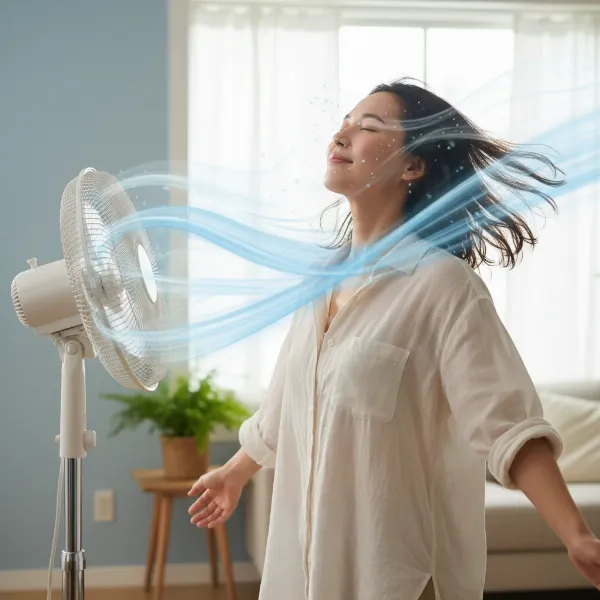 A person enjoying a strong breeze from an electric fan on a hot day, with visible lines indicating airflow around their body and subtle mist representing sweat evaporation.
Optimizing Electric Fan Usage for Maximum Comfort
To get the most out of your electric fan, consider these strategies:
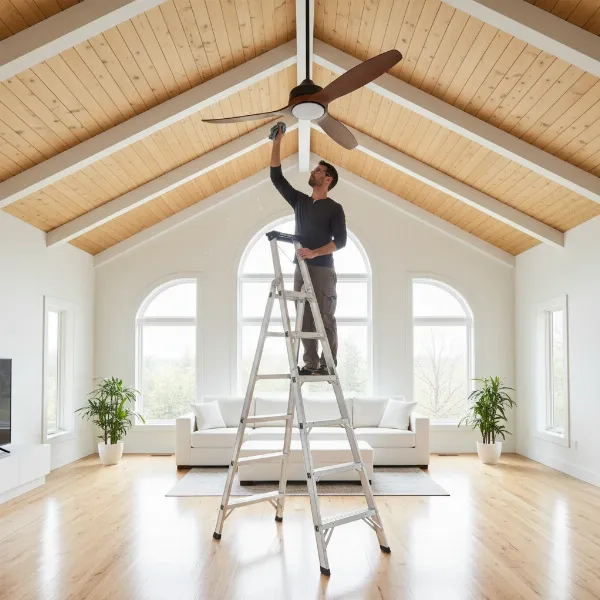
- Strategic Placement: Position the fan to create a direct breeze over your body. For whole-room circulation, especially with ceiling fans, ensure it’s set to push air downwards in summer to create a downdraft.
- Combine with Open Windows: If the outside air is cooler than inside, placing a fan near an open window can help draw in fresh, cooler air and push warmer indoor air out, facilitating effective air exchange.
- Synergy with Air Conditioning: Fans can complement air conditioning by circulating cooled air more efficiently, allowing you to potentially raise your thermostat setting slightly and save energy without sacrificing comfort. They help distribute the conditioned air evenly.
- Personal Cooling: For targeted relief, smaller personal fans can be highly effective, delivering a concentrated stream of air exactly where you need it.
Distinguishing Fans from Evaporative Coolers
It’s crucial to differentiate between standard electric fans and evaporative coolers (often called swamp coolers). While both use a fan, their cooling mechanisms differ significantly:
- Electric Fans: Move air to facilitate convective and evaporative cooling from your skin. They do not change the air temperature.
- Evaporative Coolers: Contain water-saturated pads. Air is drawn through these wet pads, causing the water to evaporate into the air. As the water evaporates, it absorbs heat from the air, thereby lowering the air temperature before it is blown into the room. These are particularly effective in dry climates where the air can absorb more moisture. [cite: 1, 2, 3 – search on “evaporative cooling fans explained”]
Choosing the Right Electric Fan for Your Cooling Needs
When selecting an electric fan, consider features that enhance its ability to create a significant wind chill effect and efficient air circulation:
- Power and Airflow (CFM): A higher Cubic Feet per Minute (CFM) rating indicates more air movement, leading to a stronger wind chill effect.
- Oscillation: Fans with oscillation spread the breeze across a wider area, beneficial for cooling multiple people or a larger personal zone.
- Speed Settings: Multiple speed settings allow you to adjust the airflow intensity, catering to different heat levels and personal preferences.
- Noise Level: For bedrooms or quiet workspaces, prioritize models with lower decibel ratings, especially at higher speeds.
- Smart Features: Some modern electric fans offer remote control, programmable timers, or even integration with smart home systems, enhancing convenience and optimizing usage.
- Fan Type: Different fan types (e.g., tower, pedestal, box, ceiling) offer varying airflow patterns and coverage. A powerful pedestal fan might offer direct, intense airflow, while a ceiling fan provides broader, ambient air movement.
Maintenance Tips for Optimal Airflow
To ensure your electric fan operates at peak efficiency and continues to provide effective cooling, regular maintenance is key. Dust and debris can accumulate on blades and grilles, impeding airflow and forcing the motor to work harder, which can paradoxically generate more heat.
- Regular Cleaning: At least once a month during heavy use, unplug your fan and wipe down the blades and protective grille with a damp cloth or use a vacuum cleaner attachment to remove dust. For more thorough cleaning, some fans allow for easy removal of the front grille.
- Motor Check: Periodically check for any unusual noises or vibrations, which could indicate a motor issue.
- Proper Storage: When not in use, store your fan in a clean, dry place to prevent dust accumulation and prolong its lifespan.
Conclusion
Electric fans are ingenious devices that provide significant personal cooling, not by lowering room temperature, but by cleverly leveraging the science of wind chill. Through the combined power of accelerated evaporative cooling and enhanced convective heat transfer, they empower your body’s natural defenses against heat. By understanding these principles and making informed choices about fan selection and usage, you can maximize your comfort, conserve energy, and truly appreciate the subtle yet profound science of a refreshing breeze. So, the next time you switch on your electric fan, remember: it’s not the air getting cooler, but you experiencing the remarkable effect of moving air. What are your favorite strategies for staying cool with an electric fan on a hot day?
Frequently Asked Questions
Do fans actually cool down a room?
|
Our Picks for the Best electric fan in 2026
As an Amazon Associate I earn from qualifying purchases.
|
||
| Num | Product | Action |
|---|---|---|
| 1 | Dreo Tower Fan for Bedroom, 90° Oscillating Standing Fans for Room with 4 Speeds, 3 Modes, 28dB Quiet for Sleep, 25ft/s Velocity, 8H Timer, Remote, Living Room, Office, Home, Black |

|
| 2 | Dreo Fan for Bedroom, 12 Inches, 70ft Powerful Airflow, 28db Quiet Table Air Circulator Fans for Whole Room, 120° Adjustable Tilt, 3 Speeds, Desktop Fan for Home, Office, Kitchen |
|
| 3 | 10\" Modern Standing Fan for Bedroom, Sleek Oscillating Pedestal Fan, 3-Speed & Height Adjustable Compact Floor Fan for Home Office & Dorm |
|
| 4 | Amazon Basics 16\" Pedestal Fan with Remote, Floor Fan, Standing Fan for Bedroom, Living Room, Office, with 3 Speeds, 3 Modes, Timer, Dual-Layered Blades, Adjustable Height, Tilt Head, 60W, Black |
|
| 5 | Dreo Tower Fan for Bedroom, 25ft/s Velocity Quiet Floor Fan, 90° Oscillating Fans for Indoors with 4 Speeds, 4 Modes, 8H Timer, Standing Fans, Bladeless Fan, Black, Nomad One (DR-HTF007) |
|
| 6 | LEVOIT Tower Fan for Bedroom, 25ft/s Velocity Standing Fan with 28dB Quiet for Sleep, Remoter, 12H Timer, 5 Speeds, 4 Modes, 90° Oscillation for Home, Office, Indoor, Bladeless 36 inch, White |
|
| 7 | Amazon Basics 20\" High Velocity Industrial Fan, Floor Fan, with 3 Speeds, Tilt Head, ETL-Listed Safety Compliance, Metal Housing/Blades, Ideal for Industrial/Commercial Space/Garage/Gym, 125W, Black |
|
| 8 | Amazon Basics Air Circulator Fan, Desk Fan for Bedroom, Home and Office, With 90-Degree Tilt Head, 3 Speed Settings, Lightweight (3 LBS), 35 Watts, Black, 11.1\"W x 6.3\"D x 10.9\"H |
|
| 9 | Lasko 2520 Oscillating Stand Fan,White 16 Inch |
|
| 10 | Dreo Fan for Bedroom, 120° Oscillating Standing Fans, Quiet Floor Fan with DC Motor, 100ft Pedestal Fans for Room, 9 Speeds, 4 modes, 20dB, 120° Manual Vertical, 37-42\" Adjustable Height, 9H Timer |
|
No, standard electric fans do not actually cool down the ambient air temperature of a room. They work by moving air, which creates a wind chill effect on your skin by accelerating sweat evaporation and improving convective heat transfer. The fan’s motor even adds a tiny amount of heat to the room.
How does wind chill relate to how a fan cools you?
The wind chill effect describes how moving air increases the rate of heat loss from an exposed surface. For humans, this means a fan’s breeze rapidly evaporates sweat from your skin, absorbing heat in the process and making you feel cooler, even if the air temperature hasn’t changed.
Are fans effective in high humidity?
Fans are less effective in high humidity environments because the air is already saturated with moisture, which slows down the rate at which sweat can evaporate from your skin. While they still provide some convective cooling by moving warm air away from your body, the primary evaporative cooling benefit is diminished.
What is the difference between an electric fan and an evaporative cooler?
An electric fan simply moves air, cooling you through evaporation and convection. An evaporative cooler (or swamp cooler) actively cools the air itself by passing it through water-saturated pads, where water evaporation absorbs heat from the air. Evaporative coolers are more effective in dry climates.
Can running a fan with windows open improve cooling?
Yes, running a fan with windows open can be effective, especially if the outside air is cooler than the inside air. The fan can help draw in the cooler outside air and push warmer indoor air out, facilitating a beneficial air exchange and improving overall comfort without trying to cool the air itself.