There’s nothing quite like the oppressive heat of a midsummer night. You’re tossing and turning, kicking off the sheets, wishing for just a hint of a breeze. So, you turn on the fan. But instead of gentle relief, you get a rattling, whirring beast that sounds like a small propeller plane getting ready for takeoff. The trade-off for a cooler room is a night filled with noise. If this sounds all too familiar, you’re in the right place. This comprehensive Quiet Electric Fan Review and guide is your first step toward reclaiming your peace and quiet without sacrificing comfort. We believe a fan shouldn’t be an intrusion; it should be a seamless, silent partner in creating your perfect home environment.
The Evolution of Cool: From Clatter to Calm
It’s easy to take the modern electric fan for granted, but its journey has been a long one. The earliest models from the late 1800s were noisy, heavy, and often-dangerous contraptions. They were marvels of their time, but “quiet” wasn’t exactly in their design vocabulary. For decades, the goal was simple: move air. The noise was just an accepted side effect.
But as technology evolved, so did our expectations. At Electric Fant, we see this evolution as our core mission. We’ve moved past the simple mechanics of spinning blades. We’re now in the era of aerodynamics, brushless DC motors, and sound-dampening materials. The modern quest isn’t just for power, but for performance delivered with whisper-quiet grace.
What Actually Makes an Electric Fan Quiet?
Before we dive into types and models, let’s pull back the curtain. Why are some fans serenely silent while others are so loud? It’s not magic; it’s engineering. Understanding these key factors will empower you to make a smarter choice.
The Heart of the Matter: The Motor
The motor is the engine of your fan, and it’s the primary source of noise.
- AC (Alternating Current) Motors: These are the traditional workhorses. They’re reliable and inexpensive to produce, but they often generate more noise and heat due to friction from their internal “brushes.”
- DC (Direct Current) Motors: This is where the innovation lies. Brushless DC motors are the gold standard for quiet operation. They use magnets and electronics to spin the blades, resulting in significantly less friction, less noise, and superior energy efficiency. They often offer more speed settings, giving you finer control over airflow and sound.
The Science of Silence: Blade Design
Think about the wing of a modern airplane. Its shape is meticulously designed to cut through the air with minimal resistance and noise. The same principle applies to high-quality fan blades.
- Aerodynamic Blades: Instead of simple, flat paddles that just chop at the air, advanced blades are curved and pitched to move air smoothly and efficiently. This reduces the “whooshing” sound of air turbulence.
- Number and Size of Blades: More blades (within reason) can sometimes move the same amount of air at a lower RPM (revolutions per minute), resulting in a quieter experience.
Finding Your Perfect Match: Types of Quiet Fans
Not all fans are created equal, and the right one for your living room might not be the best choice for your bedroom. Let’s explore the most common types.
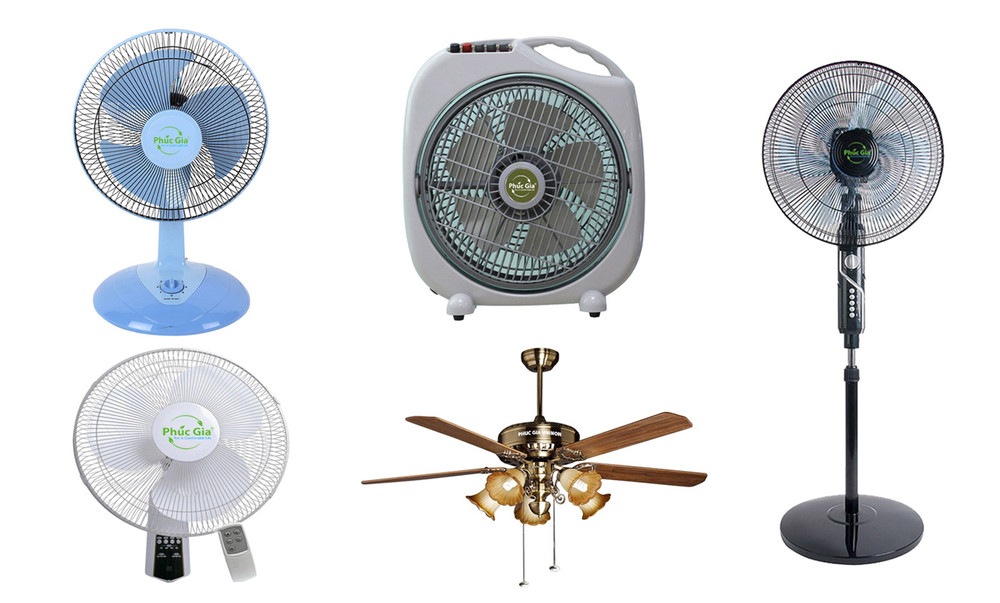
The Versatile Pedestal Fan
The classic standing fan, or pedestal fan, is a master of versatility. With an adjustable height and oscillating head, it can direct airflow exactly where you need it. Modern pedestal fans with DC motors are a world away from their wobbly, noisy ancestors.
- Best for: Living rooms, bedrooms, and larger spaces where you need targeted, powerful airflow.
- Look for: A sturdy base to prevent rattling, a DC motor, and multiple speed settings. Our line of pedestal fans focuses on combining powerful air circulation with near-silent operation.
The Sleek Tower Fan
Tower fans are the champions of style and space-saving design. Their vertical footprint makes them perfect for tight corners. Instead of traditional blades, they use impeller-style blades to draw air in and push it out through a tall, narrow vent.
- Best for: Bedrooms, home offices, and anywhere aesthetics and a small footprint are a priority.
- Keep in mind: While many are quiet, their airflow can feel less direct than a pedestal fan. A high-quality tower fan will provide a wide, gentle breeze.
The Humble Box Fan
Simple, portable, and affordable, the box fan is a no-frills solution. While not traditionally known for being the quietest, newer models have made significant strides in noise reduction. They are excellent for moving a large volume of air, like when ventilating a stuffy room.
- Best for: Workshops, garages, or for creating white noise while sleeping.
- Pro-Tip: Placing a box fan facing out an open window can be incredibly effective at pulling hot air out of a room.
The Ultimate Buyer’s Guide: How to Choose the Right Quiet Fan
Ready to make a choice? This isn’t just a purchase; it’s an investment in your comfort. This section of our quiet electric fan review will walk you through the key metrics.
Step 1: Measure the Power with CFM
Don’t be swayed by size alone. The most important measure of a fan’s power is its CFM rating (Cubic Feet per Minute). This tells you exactly how much air the fan can move. A higher CFM means more powerful airflow. Match the CFM to your room size for optimal performance.
- Small Rooms (up to 100 sq. ft.): 500-1000 CFM
- Medium Rooms (100-300 sq. ft.): 1000-2500 CFM
- Large Rooms (300+ sq. ft.): 2500+ CFM
Step 2: Understand the Decibel (dB) Rating
This is the most critical number in your search for a quiet fan. The decibel scale is logarithmic, meaning 30 dB is significantly quieter than 40 dB.
- 20-30 dB: Whisper-quiet. This is the ideal range for a bedroom. It’s comparable to the sound of rustling leaves.
- 30-40 dB: Very quiet. Similar to a quiet library. Excellent for living rooms or offices.
- 40-50 dB: Noticeable. Like a quiet conversation. This might be distracting for light sleepers.
- 50+ dB: This is where fans start to become intrusive.
Sarah Jenkins, an Interior Comfort Specialist, often notes, “People fixate on the fan’s diameter, but the true story is in the numbers: CFM tells you its strength, and dB tells you its character. A great fan has a high CFM-to-dB ratio, giving you powerful cooling without the noise.”
Step 3: Consider the Features that Enhance Your Life
Beyond the basics, modern fans come with features designed for convenience and comfort.
- Remote Control: A must-have for making adjustments from bed or the couch.
- Timer Function: Set your fan to turn off automatically after you’ve fallen asleep, saving energy.
- Multiple Speed Settings: The more settings, the more precisely you can balance airflow and noise.
- Natural Breeze Mode: This feature varies the fan speed to simulate a natural, fluctuating wind, which many find more pleasant.
|
Our Picks for the Best Electric Fan in 2026
As an Amazon Associate I earn from qualifying purchases.
|
||
| Num | Product | Action |
|---|---|---|
| 1 | Dreo Fan for Bedroom, 80° Oscillating Standing Fan, 25dB Quiet, 80ft Pedestal Fans for Home Office, 90° Manual Vertical, 3 Speeds, Remote, 34-41\" Adjustable Height, Air Circulator |

|
| 2 | Lasko Oscillating Cyclone Pedestal Fan, Adjustable Height, Timer, Remote Control, 3 Speeds, for Bedroom, Living Room, Home Office, 18\", Black, 1843 |
|
| 3 | Amazon Basics 16\" Pedestal Fan with Remote, Floor Fan, Standing Fan for Bedroom, Living Room, Office, with 3 Speeds, 3 Modes, Timer, Dual-Layered Blades, Adjustable Height, Tilt Head, 60W, Black |
|
| 4 | Comfort Zone Electric Oscillating Pedestal Fan, Stand Fan, 16 inch, 3 Speed, 90 Degree Oscillating Head, Adjustable Height and Tilt, Airflow 7.48 ft/sec, Ideal for Home, Bedroom & Office, CZST161BTEBK |
|
| 5 | Lasko Wind Machine Fan, Air Circulator Fan with 3 Speeds, 20\" Model 3300, Gray |
|
| 6 | Vornado 630 Mid-Size Whole Room Air Circulator Fan for Home, 3 Speed Settings, Adjustable Tilt, Removable Grill, 9 Inch, Powerful Airflow, Manual Control Dial, Quiet Fan for Bedroom, Black |
|
| 7 | Amazon Basics Air Circulator Fan, Desk Fan for Bedroom, Home and Office, With 90-Degree Tilt Head, 3 Speed Settings, Lightweight (3 LBS), 35 Watts, Black, 11.1\"W x 6.3\"D x 10.9\"H |
|
| 8 | Dreo Standing Fan for Bedroom, 120°+120°Omni-directional Oscillating Fan, 85 ft Circulator With Remote, DC Motor Quiet Pedestal Fans, Adjustable Height, 8 Speeds, 3 Modes, 8H Timer, TurboPolyFan 502 |
|
| 9 | EZ-CHILL 16” Oscillating Pedestal Fan, 3-speed Options, 90-Degree Oscillating Head, Adjustable Height and Tilt, Powerful Air Flow, White, MTSP15-16AZ |
|
| 10 | Dreo Tower Fan for Bedroom, 25ft/s Velocity Quiet Floor Fan, 90° Oscillating Fans for Indoors with 4 Speeds, 4 Modes, 8H Timer, Standing Fans, Bladeless Fan, Black, Nomad One (DR-HTF007) |
|
Keeping Your Cool: Maintenance for a Longer, Quieter Life
Even the best quiet electric fan needs a little TLC to stay that way. Dust buildup on the blades can cause imbalance, leading to rattling and reduced efficiency.
- Unplug First: Safety is always the first step. Always disconnect the fan from the power source before cleaning.
- Disassemble the Grille: Most fans have a grille that can be easily unclipped or unscrewed.
- Wipe the Blades: Use a soft, damp cloth to gently wipe down each blade. For stubborn grime, a mild soap and water solution works wonders.
- Clean the Grille: Wash the grille in soapy water, rinse thoroughly, and let it dry completely.
- Vacuum the Vents: Use a brush attachment on your vacuum cleaner to clear dust from the motor housing and vents.
- Reassemble: Once everything is dry, put it all back together. You’ll be amazed at the difference a simple cleaning can make!
Fan vs. Air Conditioner: A Smart Partnership
Many people see fans and air conditioners as competitors, but they are actually the perfect team. An AC unit cools the air, while a fan circulates it. Using a fan in conjunction with your AC allows you to raise the thermostat by a few degrees without feeling any warmer. This “wind chill” effect can lead to significant savings on your energy bills. A good fan helps your AC work smarter, not harder.
Frequently Asked Questions (FAQ)
Q: Is it okay to leave a quiet electric fan on all night?
A: Absolutely. Modern electric fans are designed for continuous, safe operation. Just ensure the fan is on a stable surface and its cord is not a tripping hazard. A quiet fan can even improve your sleep by providing gentle white noise and consistent air circulation.
Q: How much electricity does a quiet fan use?
A: Significantly less than an air conditioner. A typical fan on a medium setting uses about 50-70 watts, while a central AC can use 3,500 watts or more. Fans with DC motors are even more efficient, sometimes using as little as 25-30 watts on lower settings.
Q: Are tower fans quieter than pedestal fans?
A: Not necessarily. The noise level depends on the quality of the motor and the blade design, not the fan’s shape. A high-end pedestal fan with a DC motor can be quieter than a cheaply made tower fan, and vice versa. Always check the dB rating.
Q: What is the best dB rating for a bedroom fan?
A: For light sleepers, look for a fan with a maximum dB rating under 35 dB on its lower settings. Anything in the 25-30 dB range is considered exceptionally quiet and will blend seamlessly into the background.
Q: Can a fan actually cool a room?
A: Technically, fans don’t lower the room’s temperature; they create a cooling effect by accelerating the evaporation of sweat from your skin. They cool people, not rooms. However, by improving air circulation, they prevent hot, stagnant air from building up, making the entire space feel more comfortable.
Your Sanctuary of Silence and Comfort
Choosing the right appliance is about more than just specifications; it’s about curating the feeling of your home. The right fan can transform a hot, frustrating space into a cool, tranquil oasis. By looking beyond the price tag and understanding the principles of CFM, decibels, and motor technology, you are empowered to make a choice that brings both comfort and peace. We hope this quiet electric fan review has illuminated the path to a cooler, calmer, and more comfortable home.