There’s a certain magic to RV life, isn’t there? The freedom of the open road, waking up to a new view every other day. But let’s be honest, that magic can quickly fade when you’re trying to sleep in a stuffy, stagnant metal box on a warm night. Finding the right Electric Fan For RV Living isn’t just about comfort; it’s about making your home-on-wheels truly livable, especially when you’re off the grid. While your rooftop air conditioner is great, it’s a power-hungry beast. A good fan, on the other hand, is the nimble, energy-sipping hero that keeps the air moving, your batteries happy, and your adventures cool.
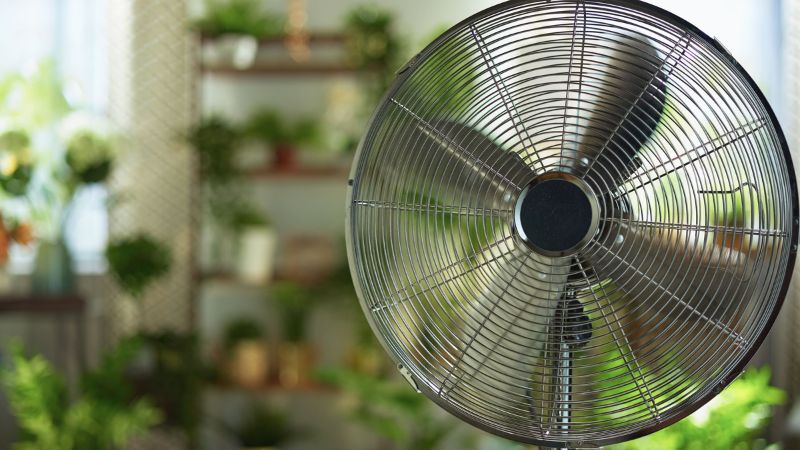
Why an Electric Fan is Your RV’s Best Friend
Before we dive into the nuts and bolts, let’s talk about why a dedicated fan is a non-negotiable piece of gear for any serious RVer. You might think the built-in vents are enough, but a well-chosen fan elevates your comfort in ways you might not expect.
First and foremost is energy efficiency. Running your AC unit, especially overnight, can drain your house batteries in a flash if you’re not hooked up to shore power. A quality DC fan uses a mere fraction of that power, allowing you to stay comfortable while boondocking without a care in the world.
Secondly, it’s all about air circulation. An RV is a compact space, and air can get stale and stratified, with hot pockets lingering near the ceiling. A fan breaks up that stagnant air, creating a consistent, comfortable environment. It can even help your AC work more efficiently by distributing the cold air it produces, meaning the AC unit doesn’t have to run as long or as hard.
Finally, there’s the simple, soothing benefit of a gentle breeze and the consistent hum of white noise, which can be a godsend for drowning out the unfamiliar sounds of a new campground or a roadside stop.
What Types of Electric Fans Work Best in an RV?
The best type of fan for your RV depends entirely on your power setup and how you plan to use it. The main options are 12V DC fans, battery-powered portable fans, and standard 110V AC fans.
The Workhorse: 12V DC Fans
These are the gold standard for integrated RV cooling. A 12V fan wires directly into your RV’s 12-volt electrical system—the same system that powers your lights and water pump.
- Pros: Extremely energy-efficient, as they don’t require an inverter. Once installed, they are always ready to go without needing to be charged. Many are designed specifically for mobile environments, with sturdy mounts and compact designs.
- Cons: They require a bit of installation. While often straightforward, you’ll need to be comfortable with some basic wiring. They are also fixed in place, so you can’t easily move them to your outdoor picnic table.
The Liberator: Battery-Powered Portable Fans
Think of these as the free spirits of the fan world. These rechargeable fans offer ultimate flexibility, untethered by any cords.
- Pros: Total portability. You can use them in the bedroom at night, move them to the kitchen while cooking, or even take them outside. There’s zero installation required.
- Cons: They have a limited runtime and need to be recharged, which consumes power. Their airflow might not be as powerful as a hardwired 12V model.
The Familiar Face: 110V AC Fans
These are the standard household fans you’d buy at any big-box store. They plug into a regular wall outlet.
- Pros: Often powerful and widely available in various styles (tower, pedestal, box). You might even have one at home already.
- Cons: They are the least efficient option for off-grid living. To run one, you need to be connected to shore power, running a generator, or using a power inverter, which converts your 12V battery power to 110V AC and results in significant energy loss.
How to Choose the Perfect Electric Fan for RV Living
Alright, you’re convinced. But with so many options, how do you pick the one that won’t just end up as clutter? It comes down to a few key factors that are critically important in a small, power-conscious space.
Power Source: The 12V vs. Battery vs. AC Showdown
This is your first and most important decision.
- If you primarily boondock or camp off-grid: A 12V DC fan is your best bet for a permanent, reliable solution. Supplement with a portable battery-powered fan for flexibility.
- If you mostly stay in campgrounds with full hookups: A 110V AC fan can work just fine, though a 12V fan is still a great backup for travel days or unexpected power outages.
Size and Footprint: Every Inch Counts
In an RV, space is the ultimate luxury. Look for fans with a small footprint. Wall-mounted or ceiling-mounted 12V fans are fantastic space-savers. For portable models, consider ones that are slim or can fold down for easy storage. Measure the area where you plan to use or store the fan before you buy.
Airflow (CFM): More Than Just Hot Air
CFM stands for Cubic Feet per Minute, and it measures the volume of air a fan moves. A higher CFM number means a more powerful fan. However, don’t just chase the highest number. A fan with a massive CFM might be overkill for a small campervan and just create a wind tunnel.
“Many people get fixated on the diameter of the fan blades, but the CFM rating is the true measure of performance. A well-designed 6-inch fan can often move more air, and do it more quietly, than a poorly designed 8-inch one. Always check the CFM spec.” – Maria Chen, Senior Engineer at Electric Fant
For a typical RV bedroom or living area, a fan in the 100-200 CFM range is often a great sweet spot, providing a noticeable breeze without being overwhelming.
Noise Level (dB): The Sound of Silence
A fan that sounds like a jet engine taking off is the last thing you want in a peaceful, confined space. Noise is measured in decibels (dB). For reference:
- 20-30 dB: A quiet whisper. Ideal for sleeping.
- 40-50 dB: A quiet library or a gentle rainfall. Acceptable for most.
- 60+ dB: A normal conversation. This will likely be intrusive when you’re trying to relax or sleep.
Look for models specifically advertised as ‘quiet’ or ‘silent’, and check reviews for real-world feedback on noise levels.
Energy Consumption: The Amp-Hour Game
For off-grid RVers, this is crucial. A fan’s power draw is measured in Amps (A). To understand its impact on your battery, you multiply the Amps by the hours you’ll run it to get Amp-hours (Ah). Your RV’s battery bank has a limited number of Amp-hours.
A hyper-efficient 12V fan might draw as little as 0.5 Amps on a low setting. Running it for 8 hours overnight would only consume 4 Ah (0.5A x 8h). A less efficient model might draw 2 Amps, consuming 16 Ah in the same period. That difference adds up quickly!
|
Our Picks for the Best Electric Fan in 2026
As an Amazon Associate I earn from qualifying purchases.
|
||
| Num | Product | Action |
|---|---|---|
| 1 | Comfort Zone Electric Oscillating Pedestal Fan, Stand Fan, 16 inch, 3 Speed, 90 Degree Oscillating Head, Adjustable Height and Tilt, Airflow 7.48 ft/sec, Ideal for Home, Bedroom & Office, CZST161BTEBK |

|
| 2 | Dreo Fan for Bedroom, 80° Oscillating Standing Fan, 25dB Quiet, 80ft Pedestal Fans for Home Office, 90° Manual Vertical, 3 Speeds, Remote, 34-41\" Adjustable Height, Air Circulator |
|
| 3 | Dreo Standing Fan for Bedroom, 120°+120°Omni-directional Oscillating Fan, 85 ft Circulator With Remote, DC Motor Quiet Pedestal Fans, Adjustable Height, 8 Speeds, 3 Modes, 8H Timer, TurboPolyFan 502 |
|
| 4 | Lasko Wind Machine Fan, Air Circulator Fan with 3 Speeds, 20\" Model 3300, Gray |
|
| 5 | Amazon Basics 16\" Pedestal Fan with Remote, Floor Fan, Standing Fan for Bedroom, Living Room, Office, with 3 Speeds, 3 Modes, Timer, Dual-Layered Blades, Adjustable Height, Tilt Head, 60W, Black |
|
| 6 | EZ-CHILL 16” Oscillating Pedestal Fan, 3-speed Options, 90-Degree Oscillating Head, Adjustable Height and Tilt, Powerful Air Flow, White, MTSP15-16AZ |
|
| 7 | Lasko Oscillating Cyclone Pedestal Fan, Adjustable Height, Timer, Remote Control, 3 Speeds, for Bedroom, Living Room, Home Office, 18\", Black, 1843 |
|
| 8 | Amazon Basics Air Circulator Fan, Desk Fan for Bedroom, Home and Office, With 90-Degree Tilt Head, 3 Speed Settings, Lightweight (3 LBS), 35 Watts, Black, 11.1\"W x 6.3\"D x 10.9\"H |
|
| 9 | Vornado 630 Mid-Size Whole Room Air Circulator Fan for Home, 3 Speed Settings, Adjustable Tilt, Removable Grill, 9 Inch, Powerful Airflow, Manual Control Dial, Quiet Fan for Bedroom, Black |
|
| 10 | Dreo Tower Fan for Bedroom, 25ft/s Velocity Quiet Floor Fan, 90° Oscillating Fans for Indoors with 4 Speeds, 4 Modes, 8H Timer, Standing Fans, Bladeless Fan, Black, Nomad One (DR-HTF007) |
|
Here’s a quick comparison to help you decide:
| Feature | 12V DC Fan | Battery-Powered Fan | 110V AC Fan |
|---|---|---|---|
| Best For | Off-grid efficiency, permanent install | Ultimate portability, versatility | Full hookup campgrounds |
| Power Source | RV’s 12V battery system | Internal rechargeable battery | Shore power, generator, inverter |
| Efficiency | Very High | Moderate (charging losses) | Low (requires inverter off-grid) |
| Installation | Required (basic wiring) | None | None |
| Portability | Low (fixed) | Very High | High |
Getting the Most Out of Your RV Fan
Once you have the perfect fan, using it strategically can double its effectiveness.
Strategic Placement for Maximum Airflow
- Create a Cross-Breeze: Place your fan near one open window, pointing it towards another open window or vent across the RV. This pulls cool air in and pushes hot air out.
- Nighttime Cooling: On cool nights, open a window and point your fan blowing out. This will exhaust the warm air that has accumulated inside during the day and pull in the cooler night air.
- Support Your AC: Place your fan on the opposite side of the room from your AC unit. Point it in the same general direction to help circulate the cool air and prevent your AC from short-cycling.
Keeping It Clean and Quiet: A Simple Maintenance Checklist
A dusty fan is an inefficient and noisy fan. Clean it every few weeks, especially in dusty environments.
- [ ] Power Down: Disconnect the fan from its power source completely.
- [ ] Open the Cage: Most fan guards can be unclipped or unscrewed.
- [ ] Wipe the Blades: Use a damp cloth to gently wipe down each fan blade. Stubborn grime can be removed with a little mild soap.
Make sure the blades are completely dry before reassembling. - [ ] Clean the Cage: Wipe down the front and back of the guard.
- [ ] Vacuum the Motor: Use a vacuum with a brush attachment to gently clear dust from the motor housing vents.
Frequently Asked Questions About RV Electric Fans
Can I run an electric fan all night in my RV?
Absolutely. A 12V DC electric fan for RV living is designed for this very purpose. They draw very little power, so a healthy battery bank can easily handle running one all night, even for multiple nights, without issue.
What is the most energy-efficient electric fan for RV living?
Hands down, 12V DC fans are the most energy-efficient choice. They run directly off your battery’s native voltage without the need for an inverter, which wastes energy during the power conversion process.
How do I power an electric fan when boondocking?
When boondocking (camping without hookups), your best options are a hardwired 12V fan connected to your house batteries or a rechargeable, battery-powered portable fan. You can recharge the portable fan during the day if you have solar panels.
Should I get a fan with an oscillating feature?
It depends. In a very small space like a campervan, oscillation might not be necessary and can be one more part to break. In a larger Class A or fifth wheel, an oscillating fan can be great for circulating air over a wider area, like a living room or main bedroom.
How important is fan noise in an RV?
Extremely important. An RV is an echo chamber. A loud fan will be disruptive when you’re trying to watch TV, have a conversation, or sleep. Prioritize fans with low decibel (dB) ratings and brushless motors, which are known for being quieter.
The Cool Conclusion
Choosing the right electric fan for RV living is about more than just beating the heat. It’s about embracing a smarter, more efficient, and more comfortable way of life on the road. It’s about enjoying those quiet, off-grid spots without worrying about your battery monitor. By considering your power source, the size of your space, and key performance metrics like CFM and power draw, you can find a fan that becomes an indispensable part of your travel kit. So go ahead, circulate that air, and make your rolling home the oasis it was meant to be.