Living in an urban apartment has its perks, but let’s be honest—when summer hits, that cozy space can quickly feel like a sauna. The air gets thick, the silence is replaced by the hum of the city, and suddenly your personal sanctuary feels a little… stuffy. Before you resign yourself to sky-high energy bills from blasting the AC, let’s talk about a smarter, more elegant solution: finding the perfect Compact Fan For Urban Apartments. This isn’t just about moving air; it’s about reclaiming your comfort, enhancing your living space, and breathing a sigh of relief.
As the voice of Electric Fant, I’ve spent years obsessing over the art and science of air circulation. I’ve seen how the right fan can completely transform a room, turning a sweltering box into a breezy oasis. This guide is my conversation with you—a deep dive into everything you need to know to choose a companion that will keep you cool for years to come.
A Brief Breeze Through Time
Believe it or not, the desire for a personal breeze is as old as civilization itself. From handheld fans in ancient Egypt to the grand, human-powered punkahs of India, we’ve always sought relief from the heat. The game changed in the 1880s with the invention of the electric fan. Suddenly, a consistent, powerful breeze was accessible to homes. Early models were heavy, loud, and purely functional. But just like everything else in our homes, the fan has evolved. Today, innovation is driven by the needs of modern life—smaller living spaces, a demand for quiet operation, and a desire for energy efficiency and style. The modern compact fan for urban apartments is the direct descendant of this long lineage of innovation.
Meet the Contenders: Types of Cooling Fans
Navigating the world of fans can feel overwhelming. Tower, pedestal, box… what’s the difference? Let’s break it down from the perspective of an apartment dweller.
Pedestal Fans
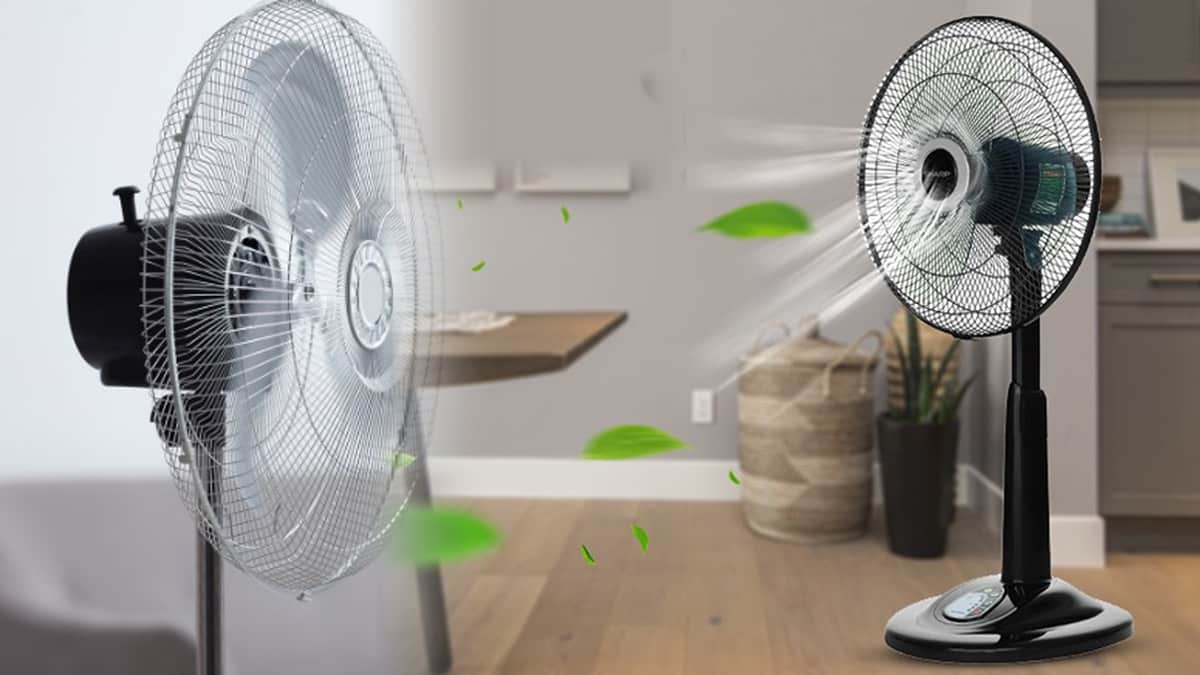
You know these guys. The classic fan-on-a-stick. They’re adjustable in height and often feature oscillation to cover a wide area.
- Pros: Great for larger rooms within an apartment, powerful airflow, adjustable height directs air exactly where you need it.
- Cons: Can have a larger footprint, and the open blades might be a concern for those with pets or small children.
Tower Fans
Sleek, modern, and space-conscious, tower fans are a favorite for city living. They stand tall and slim, using internal blades to push air out through a vertical column.
- Pros: Excellent space-savers. Their small footprint makes them ideal for tight corners. They’re generally safer and quieter than pedestal fans.
- Cons: Airflow can sometimes feel less direct than a traditional fan. Cleaning the internal components can be a bit more involved.
Box Fans
The workhorses of the fan world. These simple, square fans are known for moving a serious amount of air.
- Pros: Inexpensive and powerful. Great for creating cross-ventilation by placing one in a window facing out to exhaust hot air.
- Cons: Bulky, often loud, and lack the aesthetic appeal for a stylish apartment. They’re more function than form.
Desk and Table Fans
These are the personal coolers. Small, portable, and designed to provide a targeted breeze for one or two people.
- Pros: Extremely compact and portable. Perfect for a home office desk, bedside table, or kitchen counter.
- Cons: Not powerful enough to cool an entire room. Their utility is limited to personal space.
How Do You Choose the Perfect Compact Fan?
This is where we move from general knowledge to personalized solutions. Finding the right compact fan for urban apartments isn’t about picking the biggest or most expensive option. It’s about matching the fan’s features to your specific needs.
First, Measure Your Space and Its Purpose
A fan for your tiny home office has different requirements than one for your open-plan living and kitchen area. A larger space will benefit from a tower or pedestal fan with good oscillation, while a small bedroom might only need a quiet table fan. Always consider the primary use case before you start shopping.
Understand Cooling Power: CFM, Not Just Size
This is the single most important technical spec, and it’s often overlooked. Many people assume a bigger fan is a more powerful fan, but that’s not the whole story. The real measure of a fan’s power is its CFM rating, which stands for Cubic Feet per Minute. This tells you how much air the fan moves.
“I always advise my clients to look for the CFM rating first,” notes John Anderson, a renowned home appliance expert. “It’s the true measure of a fan’s performance. A well-engineered compact fan with a high CFM can easily outperform a larger, less efficient model. It’s about working smarter, not harder.”
For a small room (under 150 sq. ft.), a fan with 500-1000 CFM is often sufficient. For a larger living area, you might look for something in the 1000-2000 CFM range.
The Decibel Dilemma: How Loud is Too Loud?
In a compact apartment, there’s no escaping noise. A loud fan can be incredibly disruptive, whether you’re trying to sleep, watch a movie, or take a work call. A fan’s noise level is measured in decibels (dB). Here’s a quick reference:
- 20-30 dB: A soft whisper. Ideal for bedrooms.
- 30-40 dB: A quiet library. Excellent for living rooms and home offices.
- 50-60 dB: A normal conversation. This is noticeable and can be distracting.
- 70+ dB: A vacuum cleaner. Avoid this level unless you need industrial-strength cooling and don’t mind the noise.
Look for fans that advertise “quiet operation” or “whisper-quiet” modes, and always check the dB rating for the lowest setting if you’re a light sleeper.
Check for Energy Efficiency
A fan’s primary benefit over an air conditioner is its low energy consumption. To maximize these savings, look for models with an Energy Star certification. This means they meet strict energy efficiency guidelines set by the U.S. Environmental Protection Agency. Additionally, features like a timer or auto-shutoff can prevent the fan from running when you don’t need it, further cutting down on your electricity bill.
Don’t Forget the Features That Matter
Modern fans come with a host of quality-of-life features. Think about which ones would genuinely improve your experience:
- Remote Control: A must-have for changing settings from your bed or couch.
- Multiple Speed Settings: Allows you to customize the airflow from a gentle breeze to a powerful gust.
- Oscillation: Distributes air across a wider area, preventing one spot from getting too cold.
- Timer: Set it to turn off after you’ve fallen asleep.
- Smart Features: Some high-end models connect to Wi-Fi and can be controlled via a smartphone app or voice assistants.
Beyond the Breeze: Smart Use and Easy Maintenance
Buying a great fan is only half the battle. Using it effectively and keeping it in top shape will ensure you get years of cool comfort.
Tips for Maximum Cooling Efficiency
- Create a Cross-Breeze: On cooler evenings, open two windows on opposite sides of your apartment. Place a fan facing out of one window to push hot air out, which will draw cool air in through the other.
- Pair It with Your AC: If you do need to run the air conditioner, a fan can help circulate the cool air more effectively. This allows you to set the AC to a higher temperature, saving significant energy.
- Counter-Clockwise is Key: For ceiling fans, make sure the blades are rotating counter-clockwise in the summer. This pushes air straight down, creating a cooling downdraft.
- The Ice Trick: For an extra blast of cold air on a scorching day, place a shallow bowl of ice or frozen water bottles in front of your fan. The air blowing over the ice will be noticeably cooler.
|
Our Picks for the Best Electric Fan in 2026
As an Amazon Associate I earn from qualifying purchases.
|
||
| Num | Product | Action |
|---|---|---|
| 1 | Dreo Tower Fan for Bedroom, 25ft/s Velocity Quiet Floor Fan, 90° Oscillating Fans for Indoors with 4 Speeds, 4 Modes, 8H Timer, Standing Fans, Bladeless Fan, Black, Nomad One (DR-HTF007) |

|
| 2 | Dreo Standing Fan for Bedroom, 120°+120°Omni-directional Oscillating Fan, 85 ft Circulator With Remote, DC Motor Quiet Pedestal Fans, Adjustable Height, 8 Speeds, 3 Modes, 8H Timer, TurboPolyFan 502 |
|
| 3 | Lasko Wind Machine Fan, Air Circulator Fan with 3 Speeds, 20\" Model 3300, Gray |
|
| 4 | Vornado 630 Mid-Size Whole Room Air Circulator Fan for Home, 3 Speed Settings, Adjustable Tilt, Removable Grill, 9 Inch, Powerful Airflow, Manual Control Dial, Quiet Fan for Bedroom, Black |
|
| 5 | Lasko Oscillating Cyclone Pedestal Fan, Adjustable Height, Timer, Remote Control, 3 Speeds, for Bedroom, Living Room, Home Office, 18\", Black, 1843 |
|
| 6 | Amazon Basics Air Circulator Fan, Desk Fan for Bedroom, Home and Office, With 90-Degree Tilt Head, 3 Speed Settings, Lightweight (3 LBS), 35 Watts, Black, 11.1\"W x 6.3\"D x 10.9\"H |
|
| 7 | EZ-CHILL 16” Oscillating Pedestal Fan, 3-speed Options, 90-Degree Oscillating Head, Adjustable Height and Tilt, Powerful Air Flow, White, MTSP15-16AZ |
|
| 8 | Amazon Basics 16\" Pedestal Fan with Remote, Floor Fan, Standing Fan for Bedroom, Living Room, Office, with 3 Speeds, 3 Modes, Timer, Dual-Layered Blades, Adjustable Height, Tilt Head, 60W, Black |
|
| 9 | Comfort Zone Electric Oscillating Pedestal Fan, Stand Fan, 16 inch, 3 Speed, 90 Degree Oscillating Head, Adjustable Height and Tilt, Airflow 7.48 ft/sec, Ideal for Home, Bedroom & Office, CZST161BTEBK |
|
| 10 | Dreo Fan for Bedroom, 80° Oscillating Standing Fan, 25dB Quiet, 80ft Pedestal Fans for Home Office, 90° Manual Vertical, 3 Speeds, Remote, 34-41\" Adjustable Height, Air Circulator |
|
Keeping Your Fan Clean and Quiet
A dusty fan is an inefficient and noisy fan. Dust buildup on the blades can unbalance them and restrict airflow. Aim to clean your fan at least once a month during heavy use.
- Safety First: Always unplug the fan before cleaning.
- Wipe Down the Exterior: Use a damp microfiber cloth to wipe the housing and base.
- Clean the Grates: A vacuum with a brush attachment is perfect for removing dust from the front and back grates.
- Clean the Blades: If the grate is removable, take it off and wipe each blade individually with a cloth. If you can’t remove the grate, a can of compressed air can help dislodge stubborn dust.
Fan vs. Air Conditioner: The Cool Down Showdown
For urban apartment dwellers, the choice between a fan and an AC unit is a constant debate. Here’s a quick comparison to help you decide what’s best for you.
| Feature | Compact Fan | Air Conditioner |
|---|---|---|
| Upfront Cost | Low ($30 – $150) | High ($300 – $800+) |
| Running Cost | Very Low (pennies per hour) | High (can significantly increase bills) |
| Energy Use | 15-75 watts | 1,000-4,000+ watts |
| Cooling Method | Circulates air (creates a wind-chill effect) | Actually lowers the room’s temperature |
| Installation | Plug and play | Often requires window mounting and sealing |
| Portability | High | Low (heavy and bulky) |
| Environmental Impact | Low | High (uses chemical refrigerants) |
For most days, a well-chosen compact fan for urban apartments provides more than enough comfort at a fraction of the cost and environmental impact.
Frequently Asked Questions
Is it safe to leave a compact fan on all night?
Yes, for the most part. Modern fans are built with safety in mind. Ensure the fan is on a stable surface and its cord is not a tripping hazard. Some people find the constant airflow can dry out their sinuses, but for many, the white noise and cooling breeze improve sleep quality.
What’s the difference between an air circulator and a regular fan?
While all air circulators are fans, not all fans are air circulators. A standard fan creates a direct, narrow breeze. An air circulator, like those from Vornado, is designed to move air throughout the entire room, creating a more uniform temperature and whole-room circulation.
Where is the best place to position a fan in a room?
To circulate air, place the fan facing away from the wall in the corner of the room. This helps move stagnant air. To feel a direct breeze, simply point it where you’ll be sitting or sleeping. Avoid placing it where it might knock over lightweight objects.
How often should I clean my fan?
During peak summer usage, a quick dusting or vacuuming every two weeks is ideal. A deeper clean, where you wipe down the blades, should be done at least once a month to maintain performance and air quality.
Can a fan help with allergies?
While a fan moves air around, it can also kick up dust and allergens. If allergies are a major concern, it’s best to use a fan in conjunction with a dedicated air purifier. Keeping the fan blades clean is also crucial.
Your Personal Oasis Awaits
Choosing the right appliance can feel like a chore, but I hope this guide has transformed it into an empowering journey. The perfect compact fan for urban apartments is more than just a motor with blades; it’s a silent partner in your comfort, a stylish addition to your decor, and a smart choice for your wallet and the planet. By understanding the nuances of CFM, decibels, and design, you can confidently select a fan that doesn’t just cool you down, but elevates your entire living experience. Here’s to a cooler, more comfortable, and breezier home.