Let’s be honest, there’s nothing quite like relaxing on your patio on a warm day. But when that gentle warmth turns into a sweltering, sticky heat, your outdoor oasis can quickly feel more like an oven. If you’re ready to reclaim your space and are looking to buy an outdoor electric fan patio owners will love, you’ve come to the right place. This isn’t just about moving air; it’s about transforming your backyard into a year-round sanctuary of comfort. As the storytellers behind Electric Fant, we believe that the right fan is more than an appliance—it’s the key to unlocking the full potential of your outdoor living space.
Why an Outdoor Fan is a Patio Game-Changer
Before we dive into the nuts and bolts, let’s talk about the why. A dedicated outdoor fan does more than just provide a pleasant breeze. It’s a multi-talented hero for your patio, deck, or veranda.
- Beat the Heat, Beautifully: The most obvious benefit is cooling. Proper air circulation can make a space feel several degrees cooler, turning an unbearable afternoon into a delightful one.
- A No-Fly Zone for Bugs: Pesky insects like mosquitoes and flies are weak fliers. A steady breeze from a fan makes it difficult for them to navigate, creating a natural, chemical-free bug repellent. Your summer barbecues just got a lot more pleasant.
- Clear the Air: A fan helps dissipate smoke from the grill, lingering humidity after a rainstorm, and even strong floral scents, keeping your patio air fresh and clean.
- Extend Your Living Space: By making your patio more comfortable, you effectively add another room to your home. It becomes a viable spot for dining, working from home, or simply enjoying a quiet morning coffee, even when the temperature rises.
The Anatomy of an Outdoor Fan: What’s the Real Difference?
So, can’t you just drag your indoor pedestal fan outside? In a word: no. Using an indoor fan outdoors is not only ineffective but also a serious safety hazard. Here’s what sets a true outdoor fan apart.
Understanding Safety Ratings: Damp vs. Wet-Rated
This is perhaps the single most important factor when you’re looking to buy an outdoor electric fan patio model. These ratings aren’t marketing fluff; they are official UL (Underwriters Laboratories) certifications that indicate where a fan can be safely installed.
- Damp-Rated Fans: Think of these as wearing a good raincoat. They are built to withstand moisture, humidity, and condensation but are not designed for direct exposure to rain or water. They are perfect for covered patios, screened-in porches, and gazebos where they are protected from the elements. The internal components are coated to resist corrosion from humidity.
- Wet-Rated Fans: These are the all-weather warriors. They can handle anything nature throws at them—rain, snow, ocean spray, you name it. Their motor is completely sealed, and the blades are made from a weatherproof ABS plastic that won’t warp or droop. These are the go-to choice for pergolas, exposed decks, and any area where the fan will come into direct contact with water.
“Many people underestimate the power of ambient humidity to corrode a fan’s motor over time. A damp or wet rating isn’t just about rain; it’s about longevity and safety. It’s the non-negotiable starting point for any outdoor fan purchase.” – John Anderson, Home Appliance Expert
Materials That Brave the Elements
Beyond the motor, the body and blades of an outdoor fan are constructed from rugged materials. You’ll often find stainless steel hardware that resists rust and blades made from all-weather ABS plastic. Unlike the wood or particleboard blades on many indoor fans, these materials won’t warp, crack, or sag when exposed to temperature fluctuations and moisture.
How to Buy the Perfect Outdoor Electric Fan for Your Patio
Feeling more confident? Great. Now let’s get down to the fun part: choosing the perfect fan. This is where you match technology to your unique space and lifestyle.
Size and Power (CFM): The Real Measure of Cool
Don’t be fooled by just the blade span. The true measure of a fan’s power is its CFM rating, which stands for Cubic Feet per Minute. This number tells you how much air the fan actually moves. A higher CFM means a more powerful breeze.
- Small Patios (under 75 sq. ft.): Look for a fan with a CFM of 1,000 – 3,000.
- Medium Patios (75 – 150 sq. ft.): Aim for a CFM of 3,000 – 4,500.
- Large Patios (over 150 sq. ft.): You’ll want a powerful fan with a CFM of 5,000 or more. For very large spaces, consider installing two smaller fans for more even air distribution.
A quick tip: The CFM is usually listed in the product specifications. If you can’t find it, that’s a red flag. Reputable brands are always proud to display their performance metrics.
Types of Outdoor Fans: Find Your Perfect Match
Outdoor fans come in several shapes and sizes, each suited for different needs and spaces.
- Outdoor Ceiling Fans: The classic choice for covered patios with a solid roof. They provide broad, even air circulation without taking up any floor space.
- Outdoor Wall-Mounted Fans: Ideal for smaller patios or areas where a ceiling installation isn’t possible. They can be mounted to a wall or a sturdy post and often feature an oscillation function to cover a wide arc.
- Outdoor Pedestal (Standing) Fans: These offer the ultimate flexibility. You can move them wherever you need a breeze the most—near the dining table during dinner, next to the lounge chairs for an afternoon read. Look for models with a heavy, sturdy base to prevent tipping.
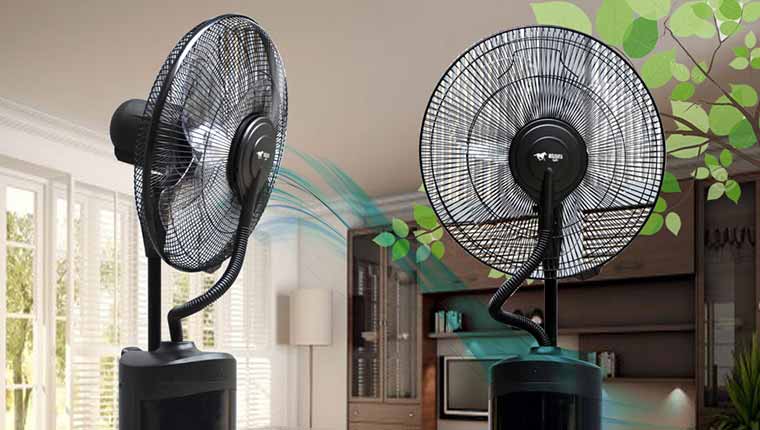
- Outdoor Misting Fans: For the ultimate cooling experience in dry, hot climates, a misting fan is king. It combines a powerful fan with a fine mist of water, which cools the air through evaporation. It feels incredibly refreshing without getting you wet.
|
Our Picks for the Best Electric Fan in 2026
As an Amazon Associate I earn from qualifying purchases.
|
||
| Num | Product | Action |
|---|---|---|
| 1 | EZ-CHILL 16” Oscillating Pedestal Fan, 3-speed Options, 90-Degree Oscillating Head, Adjustable Height and Tilt, Powerful Air Flow, White, MTSP15-16AZ |

|
| 2 | Vornado 630 Mid-Size Whole Room Air Circulator Fan for Home, 3 Speed Settings, Adjustable Tilt, Removable Grill, 9 Inch, Powerful Airflow, Manual Control Dial, Quiet Fan for Bedroom, Black |
|
| 3 | Dreo Fan for Bedroom, 80° Oscillating Standing Fan, 25dB Quiet, 80ft Pedestal Fans for Home Office, 90° Manual Vertical, 3 Speeds, Remote, 34-41\" Adjustable Height, Air Circulator |
|
| 4 | Lasko Oscillating Cyclone Pedestal Fan, Adjustable Height, Timer, Remote Control, 3 Speeds, for Bedroom, Living Room, Home Office, 18\", Black, 1843 |
|
| 5 | Amazon Basics 16\" Pedestal Fan with Remote, Floor Fan, Standing Fan for Bedroom, Living Room, Office, with 3 Speeds, 3 Modes, Timer, Dual-Layered Blades, Adjustable Height, Tilt Head, 60W, Black |
|
| 6 | Dreo Tower Fan for Bedroom, 25ft/s Velocity Quiet Floor Fan, 90° Oscillating Fans for Indoors with 4 Speeds, 4 Modes, 8H Timer, Standing Fans, Bladeless Fan, Black, Nomad One (DR-HTF007) |
|
| 7 | Amazon Basics Air Circulator Fan, Desk Fan for Bedroom, Home and Office, With 90-Degree Tilt Head, 3 Speed Settings, Lightweight (3 LBS), 35 Watts, Black, 11.1\"W x 6.3\"D x 10.9\"H |
|
| 8 | Dreo Standing Fan for Bedroom, 120°+120°Omni-directional Oscillating Fan, 85 ft Circulator With Remote, DC Motor Quiet Pedestal Fans, Adjustable Height, 8 Speeds, 3 Modes, 8H Timer, TurboPolyFan 502 |
|
| 9 | Lasko Wind Machine Fan, Air Circulator Fan with 3 Speeds, 20\" Model 3300, Gray |
|
| 10 | Comfort Zone Electric Oscillating Pedestal Fan, Stand Fan, 16 inch, 3 Speed, 90 Degree Oscillating Head, Adjustable Height and Tilt, Airflow 7.48 ft/sec, Ideal for Home, Bedroom & Office, CZST161BTEBK |
|
Don’t Forget the Details: Noise, Energy, and Features
The best technology is the kind you don’t notice. Here are a few final considerations:
- Noise Level (dB): A fan should create a breeze, not a racket. The noise level is measured in decibels (dB). A fan operating under 60 dB is generally considered quiet and won’t interrupt your conversations.
- Energy Efficiency: Look for fans with an ENERGY STAR® rating. These models are certified to be more energy-efficient than standard models, saving you money on your electricity bill without sacrificing performance. DC motors are often quieter and more efficient than traditional AC motors.
- Convenient Features: Modern outdoor fans can come with features like multi-speed settings, remote controls, and built-in lighting, adding another layer of convenience and functionality to your outdoor space.
Expert Tips for Installation and Maintenance
Once you buy an outdoor electric fan patio model, a little care goes a long way in ensuring it performs beautifully for years.
As landscape architect Sarah Jenkins notes, “Fan placement is both an art and a science. Consider the primary seating area and the natural airflow of your space. A well-placed fan not only cools but also enhances the overall aesthetic and flow of your outdoor room.”
Maintenance Checklist:
- Safety First: Always turn off the power at the circuit breaker before cleaning or servicing your fan.
- Wipe Down Blades: At least once a season, use a soft, damp cloth to wipe down the fan blades. Dust and grime can build up, unbalancing the blades and reducing efficiency.
- Check Hardware: Gently check that all screws and bolts are secure. The fan’s constant motion can sometimes loosen them over time.
- Inspect for Corrosion: Periodically inspect the fan’s housing and hardware for any signs of rust or corrosion, especially if you live in a coastal area.
Outdoor Fans vs. Other Cooling Solutions: A Quick Comparison
How does an outdoor fan stack up against other options? Here’s a simple breakdown.
| Feature | Outdoor Electric Fan | Portable Air Conditioner | Misting System (Standalone) |
|---|---|---|---|
| Cooling Method | Air Circulation (Wind Chill) | Refrigerant Cooling | Evaporative Cooling |
| Best For | Humid & Dry Climates | Enclosed Spaces (Sunrooms) | Dry, Arid Climates |
| Energy Use | Low | High | Moderate |
| Installation | Easy to Moderate | Easy (Requires Venting) | Moderate to Complex |
| Upfront Cost | $ – $$ | $$ – $$$ | $$ – $$$$ |
Frequently Asked Questions (FAQ)
Q: Can I use an indoor extension cord for my outdoor fan?
A: No, you should only use an extension cord that is specifically rated for outdoor use. These cords are built with weather-resistant insulation to prevent short circuits and electrical hazards when exposed to moisture.
Q: Will an outdoor misting fan make my patio furniture wet?
A: A high-quality misting fan atomizes water into such fine droplets that they evaporate almost instantly, cooling the air without leaving surfaces damp. Low-quality systems or incorrect settings might cause some dampness.
Q: How high should I mount my outdoor ceiling fan?
A: For optimal air circulation and safety, the fan blades should be at least 7 feet from the floor but no more than 9-10 feet. For higher ceilings, you can use a downrod to position the fan at the correct height.
Q: Does a darker colored fan absorb more heat?
A: While dark colors do absorb more heat from sunlight, the material and motor quality have a much greater impact on the fan’s performance and longevity than its color. Choose a color that complements your patio decor.
Q: Is it okay to leave my outdoor fan running all the time?
A: Yes, outdoor fans are designed for continuous operation. However, for energy conservation and to prolong the motor’s life, it’s a good practice to turn it off when you’re not using the patio.
Your Oasis Awaits
Choosing to buy an outdoor electric fan patio owners recommend is one of the best investments you can make for your home. It’s a simple, energy-efficient, and effective way to conquer the heat and transform your outdoor space from a seasonal afterthought into a year-round destination for relaxation and entertainment. By focusing on the right safety rating, understanding CFM, and selecting a type that fits your space, you’re not just buying a fan—you’re crafting a better lifestyle. Now go ahead, create that perfect breeze.