Let’s be honest, we’ve all been there. It’s the middle of a sweltering afternoon, the air is thick and still, and your only source of relief is that clunky, plastic fan humming discordantly in the corner. It does the job, sort of, but it’s an eyesore that completely kills your home’s vibe. What if you didn’t have to choose between staying cool and staying stylish? The journey to buy a decorative electric fan is about discovering that you can, and should, have both. It’s about transforming a purely functional appliance into a statement piece that enhances your living space.
Here at Electric Fant, we believe a fan is more than just a motor and blades; it’s an integral part of your home’s comfort and aesthetic. It’s a quiet companion on a warm evening and a centerpiece that pulls a room together. Forget the noisy, wobbly fans of the past. Today, we’re diving deep into the art and science of choosing a fan that not only circulates air but also circulates style.
A Breeze Through Time: The Evolution of the Fan
The electric fan has come a long way from its purely industrial origins in the late 1800s. Early models were heavy, utilitarian machines designed for one purpose: moving air. Style was an afterthought, if it was a thought at all. But as homes became more design-conscious, so did the appliances within them. The mid-century modern era brought sleek lines and new materials, while the 70s introduced bold colors. Today, the market is filled with designs that cater to every imaginable aesthetic, from rustic farmhouse to minimalist chic. This evolution means that when you decide to buy a decorative electric fan, you’re participating in over a century of innovation in both technology and design.
Finding Your Flow: Common Types of Decorative Fans
Choosing the right type of fan is the first step. Each style offers a unique blend of aesthetics and functionality, suited for different spaces and needs.
The Elegant Pedestal Fan
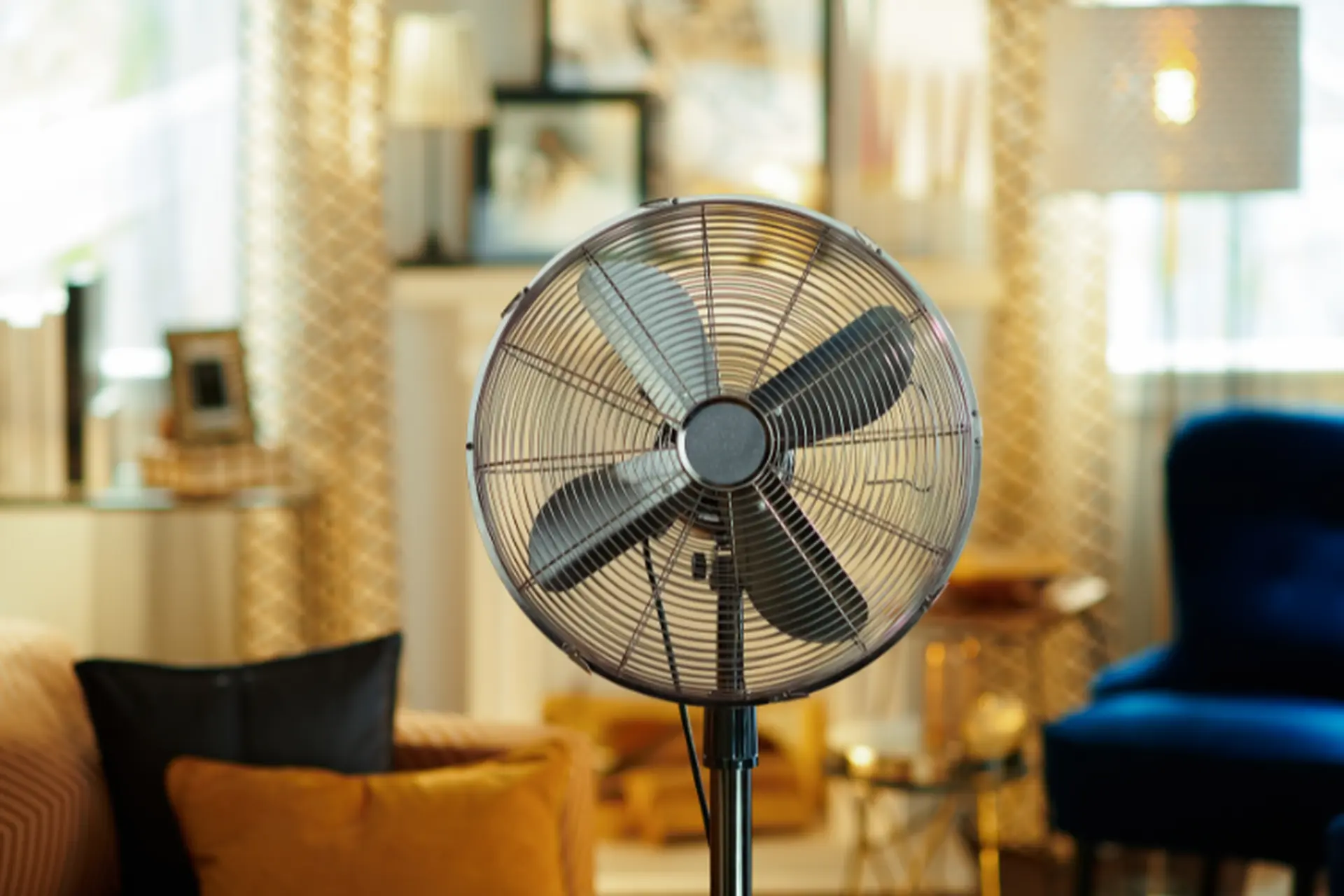
The modern pedestal fan is a far cry from its flimsy ancestors. Today’s designs feature high-quality materials like brushed nickel, oiled bronze, and natural woods. They are adjustable, powerful, and often whisper-quiet. A beautifully crafted pedestal fan can act as a piece of sculptural art in a living room corner or next to a reading chair, offering targeted and stylish air circulation.
The Sleek Tower Fan
For those with a love for minimalism and modern technology, the tower fan is a perfect fit. Its slender, vertical design takes up minimal floor space, making it ideal for smaller rooms or clean, uncluttered aesthetics. Many tower fans come packed with features like multiple speed settings, oscillation, and remote controls, blending seamlessly into a contemporary living space or home office.
The Statement Ceiling Fan
A ceiling fan is often the most impactful decorative choice. It serves as a central lighting fixture and a powerful cooling solution. From large, dramatic blades perfect for great rooms with vaulted ceilings to compact, chic designs for bedrooms, a ceiling fan anchors a room’s style. Look for models with reversible blades offering different wood finishes or colors to change up your decor with the seasons.
The Versatile Floor Fan
Don’t underestimate the humble floor fan! Often inspired by vintage or industrial designs, these fans sit low to the ground and can make a powerful style statement. Think retro-cool with all-metal construction and a caged front, perfect for a loft apartment, a creative studio, or a room with an eclectic vibe. They are workhorses of air circulation, often delivering a powerful, wide-ranging breeze.
How to Choose When You Buy a Decorative Electric Fan
Looks are important, but performance is paramount. A beautiful fan that doesn’t move air is just a sculpture. Here’s how to ensure your choice is both pretty and powerful.
What’s the Right Size for Your Room?
The most crucial metric for a fan’s performance is its CFM rating (Cubic Feet per Minute). This number tells you exactly how much air the fan moves. A higher CFM means more powerful air circulation. Don’t just look at the blade size! A well-engineered 12-inch fan can outperform a poorly designed 16-inch one. As a general rule:
- Small rooms (up to 75 sq. ft.): Look for fans around 1,000 CFM.
- Medium rooms (75-175 sq. ft.): Aim for 1,000-2,500 CFM.
- Large rooms (over 175 sq. ft.): You’ll want 2,500 CFM or higher.
How Important is the Noise Level?
A fan’s sound is a critical part of the user experience. No one wants a cooling fan that sounds like a jet engine taking off. Noise is measured in decibels (dB). For bedrooms or offices, look for a fan that operates under 50 dB on its lower settings, which is comparable to a quiet conversation or a refrigerator’s hum. Many premium fans now use DC motors, which are not only more energy-efficient but also significantly quieter than traditional AC motors.
“A common mistake is focusing solely on aesthetics. A truly great decorative fan integrates into your life seamlessly. That means it must be quiet enough to forget it’s there, powerful enough to feel its effect, and beautiful enough to be proud of. Always check the CFM and dB ratings before you buy.”
— John Anderson, Home Appliance Engineer
What Features Actually Matter?
Modern fans are smarter than ever. Here are a few features that can genuinely improve your quality of life:
- Remote Control: A must-have for convenience, especially for ceiling fans or for adjusting settings from your bed.
- Timer Function: Set your fan to turn off automatically after you’ve fallen asleep to save energy.
- Variable Speed Settings: More than just “high, medium, low.” Look for models with 6 or more speeds for precise comfort control.
- Oscillation: Ensures air is distributed evenly throughout the room rather than just in one spot.
Does Material and Finish Make a Difference?
Absolutely! The materials dictate not only the fan’s look but also its durability.
- Metal finishes (brushed nickel, matte black, aged bronze) lend themselves to industrial, modern, or transitional styles.
- Wooden blades or accents bring warmth and a natural feel, perfect for farmhouse, coastal, or bohemian decor.
- High-quality polymers can be molded into sleek, futuristic shapes ideal for minimalist and contemporary spaces.
Think about the existing hardware and finishes in your room—light fixtures, cabinet pulls, door handles—and choose a fan that complements them.
|
Our Picks for the Best Electric Fan in 2025
As an Amazon Associate, we earn from qualifying purchases.
|
||
| Num | Product | Action |
|---|---|---|
| 1 | Amazon Basics Air Circulator Fan, Desk Fan for Bedroom, Home and Office, With 90-Degree Tilt Head, 3 Speed Settings, Lightweight (3 LBS), 35 Watts, Black, 11.1\"W x 6.3\"D x 10.9\"H |

|
| 2 | Comfort Zone Electric Oscillating Pedestal Fan, Stand Fan, 16 inch, 3 Speed, 90 Degree Oscillating Head, Adjustable Height and Tilt, Airflow 7.48 ft/sec, Ideal for Home, Bedroom & Office, CZST161BTEBK |
|
| 3 | Lasko Oscillating Cyclone Pedestal Fan, Adjustable Height, Timer, Remote Control, 3 Speeds, for Bedroom, Living Room, Home Office, 18\", Black, 1843 |
|
| 4 | Dreo Standing Fan for Bedroom, 120°+120°Omni-directional Oscillating Fan, 85 ft Circulator With Remote, DC Motor Quiet Pedestal Fans, Adjustable Height, 8 Speeds, 3 Modes, 8H Timer, TurboPolyFan 502 |
|
| 5 | EZ-CHILL 16” Oscillating Pedestal Fan, 3-speed Options, 90-Degree Oscillating Head, Adjustable Height and Tilt, Powerful Air Flow, White, MTSP15-16AZ |
|
| 6 | Dreo Tower Fan for Bedroom, 25ft/s Velocity Quiet Floor Fan, 90° Oscillating Fans for Indoors with 4 Speeds, 4 Modes, 8H Timer, Standing Fans, Bladeless Fan, Black, Nomad One (DR-HTF007) |
|
| 7 | Amazon Basics 16\" Pedestal Fan with Remote, Floor Fan, Standing Fan for Bedroom, Living Room, Office, with 3 Speeds, 3 Modes, Timer, Dual-Layered Blades, Adjustable Height, Tilt Head, 60W, Black |
|
| 8 | Dreo Fan for Bedroom, 80° Oscillating Standing Fan, 25dB Quiet, 80ft Pedestal Fans for Home Office, 90° Manual Vertical, 3 Speeds, Remote, 34-41\" Adjustable Height, Air Circulator |
|
| 9 | Lasko Wind Machine Fan, Air Circulator Fan with 3 Speeds, 20\" Model 3300, Gray |
|
| 10 | Vornado 630 Mid-Size Whole Room Air Circulator Fan for Home, 3 Speed Settings, Adjustable Tilt, Removable Grill, 9 Inch, Powerful Airflow, Manual Control Dial, Quiet Fan for Bedroom, Black |
|
Keeping Your Cool Companion Happy: Maintenance Tips
A little care goes a long way in keeping your decorative fan running smoothly and looking great for years to come.
- Turn It Off: Always unplug the fan before cleaning. Safety first!
- Dust the Blades: Use a microfiber cloth or a duster to gently wipe down each blade. For stubborn grime, a cloth dampened with a mild soap and water solution works wonders.
- Clean the Grille: Use a vacuum with a brush attachment to remove dust from the front and back grilles (cages). For a deeper clean, you may be able to unscrew the grille.
- Wipe the Body: Clean the base and motor housing with a soft cloth.
- Check for Stability: Periodically ensure all screws are tight and that the fan rests on a level surface to prevent wobbling and noise.
The Unsung Hero: Benefits Beyond the Breeze
Investing when you buy a decorative electric fan pays dividends beyond just immediate cooling.
- Energy Efficiency: A fan uses a tiny fraction of the electricity an air conditioner does. Using a fan in conjunction with your AC allows you to raise the thermostat by a few degrees, potentially saving you up to 40% on cooling costs without sacrificing comfort.
- Year-Round Air Circulation: In the winter, you can reverse the direction of your ceiling fan to push warm air that has risen back down into the living space, improving your heating efficiency.
- Improved Air Quality: A good fan keeps air from becoming stagnant, reducing stuffiness and helping to dissipate odors more quickly.
The Great Cool-Down: Fans vs. Other Cooling Solutions
How does a decorative electric fan stack up against other options? Let’s break it down.
| Feature | Decorative Electric Fan | Air Conditioner (AC) |
|---|---|---|
| Primary Function | Circulates air to create a wind-chill effect | Actively cools and dehumidifies the air |
| Energy Consumption | Very Low (typically 30-100 watts) | Very High (typically 1,500-3,500 watts) |
| Installation | Plug-and-play or standard wiring | Professional installation often required |
| Cost | Generally affordable | Significant upfront investment |
| Aesthetic Impact | Can be a central design element | Often bulky and difficult to integrate |
| Portability | High (for pedestal, tower, floor models) | Low (for central or window units) |
Frequently Asked Questions
Can a decorative fan actually cool a large room?
A fan doesn’t lower the room’s temperature; it creates a wind-chill effect that makes you feel cooler. A high-CFM fan can effectively circulate air in a large room, making the entire space feel more comfortable. For very large, open-plan areas, using two fans strategically can create a pleasant cross-breeze.
Are decorative electric fans more expensive than standard ones?
While some high-end designer models come with a premium price tag, there are many affordable options that don’t compromise on style. When you consider the quality of materials, quieter performance, and longevity, the investment in a good decorative fan often provides better value over time.
Is it safe to leave an electric fan on all night?
Generally, yes. Modern fans are built with safety standards in mind. Ensure your fan is in good working condition, placed on a stable surface, and that its cord is not frayed. Using a timer function is a great way to enjoy the breeze as you fall asleep without leaving it on all night.
How often should I clean my fan?
A quick dusting every couple of weeks is a good habit. A more thorough cleaning, as described above, should be done every 1-2 months, or more often if you live in a dusty area or have pets. A clean fan operates more efficiently and improves your indoor air quality.
What is the difference between an AC and a DC motor fan?
AC (Alternating Current) motors are the traditional standard—reliable but less efficient and with fewer speed options. DC (Direct Current) motors are a newer technology. They are significantly more energy-efficient (using up to 70% less power), are virtually silent, and typically offer more speed and feature controls, like reversing the direction from the remote.
A Stylish Breath of Fresh Air
The decision to buy a decorative electric fan is about more than just beating the heat. It’s an opportunity to elevate your space, to add a piece that is both functional and beautiful, and to make a smart, energy-efficient choice for your home. By considering the interplay of performance metrics like CFM and dB with aesthetic elements like material and finish, you can find the perfect cooling companion that complements your style and enhances your daily life. So go ahead, give your home the stylish breath of fresh air it deserves.