Keeping our beloved pets comfortable, especially when crated, is a top priority for any pet parent. Whether for travel, during dog shows, or simply for supervised downtime, ensuring adequate ventilation and a cool environment within a pet crate or kennel is crucial. Uncomfortable heat can quickly lead to distress or even dangerous conditions like heatstroke. Fortunately, a well-chosen electric fan for your pet’s enclosure can make a significant difference, transforming a stuffy space into a refreshing haven.
This comprehensive guide will walk you through everything you need to know about selecting the Best Fans For Pet Crates And Kennels. We’ll explore how these devices effectively cool our canine companions, delve into the various types available, highlight essential features to consider, and offer practical advice for safe usage and maintenance.
Why Your Pet Needs a Crate Fan: Understanding Canine Cooling
Dogs and other pets regulate their body temperature differently than humans. While we sweat to cool down, dogs primarily rely on panting to release heat. Fans work by accelerating the displacement of hot air around your pet, enhancing convective heat transfer, which aids in their natural cooling process. This improved airflow can make a crated pet feel significantly cooler and more comfortable.
However, it’s vital to understand the limitations. Fans excel in moderately warm conditions, typically when temperatures range between 70 and 80 degrees Fahrenheit. Above approximately 90 degrees Fahrenheit, fans may become ineffective and can even worsen conditions by circulating already hot air, potentially increasing the risk of overheating. Therefore, a crate fan is a tool to enhance comfort and provide relief, not a substitute for air conditioning in extreme heat.
Types of Fans for Pet Crates and Kennels
The market offers a variety of fans designed or adapted for pet crates and kennels, each with unique advantages. Understanding these types will help you choose the most suitable option for your pet’s needs and your specific situation.
Clip-On & Hanging Crate Fans
These are perhaps the most common and versatile types, designed to easily attach to the wire mesh of most standard pet crates. They are typically compact and lightweight, making them highly portable.
- Advantages:
- Portability: Easy to move between crates, vehicles, or different locations.
- Versatility: Can be positioned precisely to direct airflow where your pet needs it most.
- Affordability: Often more budget-friendly than larger, more robust options.
- Simple Installation: Usually clip or hang directly onto crate bars.
- Disadvantages:
- Lower Airflow: Generally less powerful than standing fans, suitable for smaller crates or moderate cooling.
- Battery Consumption: Some models can deplete batteries quickly if not rechargeable or energy-efficient.
- Ideal Use Cases: Perfect for car travel, short trips, dog shows, or for small to medium-sized crates in moderately warm indoor environments. Examples include the Cool Pup or Mikikin Portable Clip-On Fan.
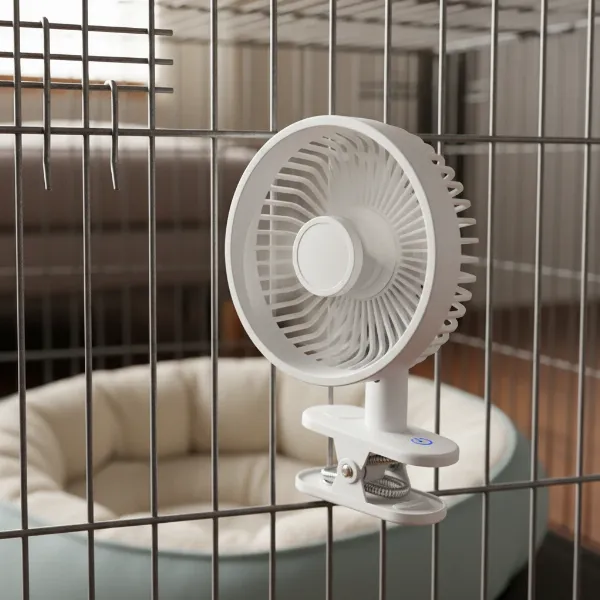 A small, white clip-on fan attached to the wire mesh of a grey dog crate, providing air circulation.
Standing & Box Fans (Including Portable Power Tool Battery Fans)
These fans offer more robust cooling power and are often larger than clip-on models. Many are designed as general-purpose portable fans but are highly effective for kennels due to their strong airflow and durable construction. A popular sub-category includes fans powered by rechargeable batteries from tool brands like Ryobi or Ridgid.
- Advantages:
- Powerful Airflow: Can move a significant volume of air, ideal for larger crates or hotter conditions (within safe limits).
- Durability: Often built with sturdy materials, some even weatherproof and dustproof.
- Longer Battery Life (for tool battery types): Many industrial-style fans offer impressive runtimes, especially if using high-capacity power tool batteries.
- Disadvantages:
- Size: Can be bulky and might not fit all crate setups or smaller spaces.
- Cost: Often a higher upfront investment, especially for tool battery systems (if batteries/chargers aren’t already owned).
- Placement: May require careful placement to ensure stability and proper airflow into the crate.
- Ideal Use Cases: Excellent for large dog kennels, outdoor events where substantial cooling is needed, or for situations requiring extended, powerful airflow. Brands like Lucky Duck Kennel Fan and Ryobi ONE+ Cordless Fans are frequently praised in this category.
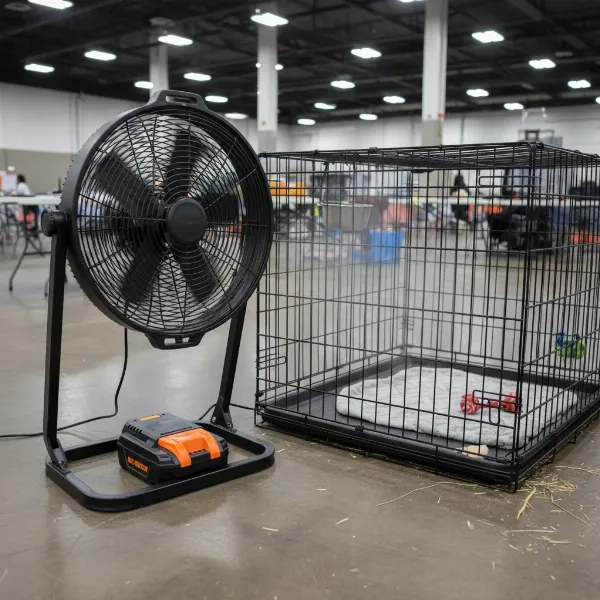 A robust, black portable standing fan positioned next to a large dog kennel, providing powerful airflow.
Dedicated Kennel Ventilation Systems (for Permanent Kennels)
While beyond the scope of portable crate fans, it’s worth noting that permanent kennel structures may benefit from integrated ventilation solutions. These can include exhaust fans, ceiling fans, or gable vents designed to improve overall air quality, regulate temperature, and control humidity within a larger, stationary kennel environment. These are typically hard-wired and installed permanently, offering comprehensive air circulation for dedicated pet spaces.
Key Features to Consider When Choosing a Pet Crate Fan
When investing in a fan for your pet’s crate, several features contribute to its effectiveness, safety, and overall value. Prioritizing these aspects will help you make an informed decision.
Power Source & Battery Life
The power source dictates portability and convenience.
- Battery-Powered: Most popular for crate fans, offering ultimate portability. Look for models with rechargeable lithium-ion batteries for sustainability and longer life. Good battery runtime (e.g., 6-40 hours depending on speed) is crucial for extended use away from power outlets. Battery-operated fans also eliminate the risk of pets chewing on cords, a significant safety concern.
- AC Plug-in: Suitable for stationary setups where an outlet is readily available. Offers continuous power without worrying about battery life.
- USB-Powered: Increasingly common, offering flexibility to power via power banks, car chargers, or wall adapters.
Airflow & Speed Settings
A fan’s primary job is to move air.
- Multiple Speed Settings: Essential for adjusting the intensity of airflow based on temperature and your pet’s comfort level. Two to four speeds are common.
- Powerful Airflow (CFM): For larger crates or hotter conditions, a fan with higher Cubic Feet per Minute (CFM) will be more effective.
Safety & Design
Pet safety is paramount.
- Enclosed Blades: Blades should be fully enclosed by a grille with small enough openings to prevent paws, noses, or tails from accessing them.
- Cord Safety: If choosing a corded fan, ensure the cord is heavy-duty, chew-resistant, and kept out of your pet’s reach. Battery-operated options mitigate this risk.
- Durable Construction: A fan built with robust, high-quality materials will withstand travel and regular use.
- Weather Resistance: For outdoor use or car travel, features like water-resistant battery compartments or weatherproof construction are beneficial. The Gunner Kennel Fan 2.0, for example, is noted for being weatherproof and dustproof.
Noise Level
A loud fan can be distressing for sensitive or anxious pets.
- Quiet Motor: Look for fans specifically advertised as having a quiet operation. A fan that produces minimal noise ensures your pet remains calm and undisturbed.
Size, Portability, and Mounting
Consider how the fan will integrate with your pet’s crate.
- Crate Compatibility: Ensure the fan’s size and mounting mechanism are compatible with your specific crate (wire, solid, large, small).
- Ease of Attachment: Simple, secure attachment methods are a plus.
- Adjustable Positioning: A fan with a rotatable head or adjustable angle allows you to direct airflow without blasting it directly at your pet’s face constantly.
Additional Features
Some fans offer extra conveniences.
- Built-in Thermometer: Helps monitor the ambient temperature.
- Timer Functions: Allows you to set the fan to run for a specific duration.
- Remote Control: Offers convenience for adjusting settings without disturbing your pet.
- Charging Indicators: LED lights that show battery life or charging status.
Top Brands and Recommended Fans for Pet Crates and Kennels
While specific models evolve, certain brands consistently receive high marks for their performance and suitability for pet crates.
- Ryobi ONE+ Cordless Fan: Often lauded for its powerful airflow and integration with Ryobi’s versatile battery system. Users appreciate its strong cooling capabilities for larger crates.
- Lucky Duck Dog Kennel Fan: A heavy-duty option known for maximum airflow and a robust, water-resistant design, typically with a rechargeable battery for extended use.
- Cool Pup Hanging Dog Crate Fan: A popular choice for its dual-speed options and sometimes includes a built-in thermometer, ideal for attaching to wire crates.
- Mikikin Portable Clip-On Fan: Valued for its versatility and adjustable airflow, making it a budget-friendly and precise option.
- Gunner Kennel Fan 2.0: Specifically designed for Gunner Kennels, this fan is weatherproof, dustproof, and features an internal lithium battery with long runtimes, making it a premium choice for serious enthusiasts.
How to Safely Use and Maintain Your Pet Crate Fan
Maximizing the benefits of your crate fan while ensuring your pet’s safety requires proper usage and maintenance.
- Strategic Placement: Position the fan to circulate air effectively around the crate, ideally at a slight angle rather than blowing directly into your pet’s face. This creates a comfortable breeze without excessive direct force.
- Monitor Temperature: Always be aware of the ambient temperature. If it exceeds 80-85°F, or certainly above 90°F, a fan alone is insufficient and can be dangerous. Consider moving your pet to an air-conditioned space or delaying travel.
- Provide Water: Ensure your pet always has access to fresh water, especially when using a fan, as increased airflow can lead to dehydration.
- Combine with Other Cooling Methods: For added comfort, especially in warmer conditions, pair the fan with cooling mats or vests.
- Regular Cleaning: Dust and pet hair can accumulate on fan blades and grilles, reducing efficiency and potentially circulating allergens. Clean your fan regularly according to the manufacturer’s instructions.
- Check for Damage: Before each use, inspect the fan for any damage, especially to cords (if applicable) or blade enclosures, to prevent injury.
- Supervise Your Pet: While fans are generally safe, always supervise your pet, especially when they are first introduced to a new fan, to ensure they are comfortable and not attempting to chew on parts.
“A crate fan is a valuable accessory for pet parents, offering a practical way to enhance airflow and comfort for pets in their crates. However, it’s a supplemental cooling solution, not a primary one for extreme heat.” – Dr. Corinne Wigfall, Veterinarian and Canine Expert
Conclusion
Choosing the best fan for your pet’s crate or kennel is a proactive step toward ensuring their comfort and safety, particularly during warmer months or travel. By understanding the differences between fan types, evaluating critical features like power source, airflow, and safety design, and committing to proper usage and maintenance, you can make an informed decision that will greatly benefit your furry friend. A well-ventilated crate contributes significantly to your pet’s overall well-being, transforming their enclosed space into a cool, calm retreat.
Ready to make your pet’s crate more comfortable? Which features will you prioritize for your furry companion’s ultimate cool experience?
Frequently Asked Questions
Are crate fans safe for dogs?
Yes, crate fans are generally safe for dogs when used correctly. Battery-operated models are often recommended to eliminate the risk of cord chewing and electric shock. It’s important to ensure blades are fully enclosed to prevent injury, and to use them in appropriate temperatures, avoiding extreme heat.
How hot is too hot for a dog with a crate fan?
Experts suggest that crate fans are most effective in temperatures between 70 and 80 degrees Fahrenheit. Once the temperature climbs above 90 degrees Fahrenheit, fans can become ineffective or even detrimental, as they merely circulate hot air, making conditions potentially worse. Always seek air-conditioned environments in extreme heat.
Do dog crate fans actually work?
Yes, dog crate fans work by increasing airflow and displacing hot air around your pet, aiding their natural cooling process through convection. While they don’t lower the ambient temperature of a room, they can significantly enhance a dog’s comfort and help prevent overheating in moderate conditions.
Can I use a regular fan for my dog’s crate?
While some regular portable fans might be adapted for use with pet crates, it’s crucial to ensure they meet safety requirements. Specifically, the blades must be completely enclosed to protect your pet, and any cords must be kept out of reach to prevent chewing and electric shock. Dedicated pet crate fans are designed with these safety features in mind.
How long do pet crate fans typically last on battery?
Battery life varies significantly by model, speed setting, and battery capacity. Many quality pet crate fans offer runtimes ranging from 6 to 20 hours on a full charge, with some high-capacity power tool battery fans lasting even longer, up to 40 hours on lower settings. Checking specific product specifications for expected battery life is always recommended.