The quiet hum of a fan can be a comforting sound on a warm day, but for many, the whirring noise and the associated electricity bill are less appealing. As technology advances, electric fans have evolved, presenting us with two primary motor types: Alternating Current (AC) and Direct Current (DC). Understanding the fundamental differences between these motors, especially concerning energy consumption, is crucial for anyone looking to make an informed choice for their home or workspace. This article delves into the core mechanics, benefits, and drawbacks of both AC and DC motor fans, ultimately helping you determine which one truly saves more energy and offers the best value for your needs.
Understanding AC Motor Fans
AC motor fans represent the traditional choice in cooling technology, having been a staple in homes and businesses for decades. These fans operate directly on the alternating current supplied by your household electrical grid. The motor’s mechanism is relatively straightforward: electricity alternates its direction, generating a magnetic field that causes the rotor to spin and, consequently, the fan blades to turn.
While AC fans are renowned for their reliability and lower initial purchase price, their operational characteristics come with a few trade-offs. They generally consume more energy compared to their modern DC counterparts, leading to potentially higher electricity bills over time. The electromagnetic forces at play within AC motors can also result in a noticeable “hum,” making them less ideal for noise-sensitive environments like bedrooms or quiet offices. Furthermore, AC fans typically offer a limited number of speed settings, often just three or four, which restricts precise control over airflow. Their motor design tends to be bulkier, and changing blade direction for seasonal use usually requires manually flipping a switch on the motor housing.
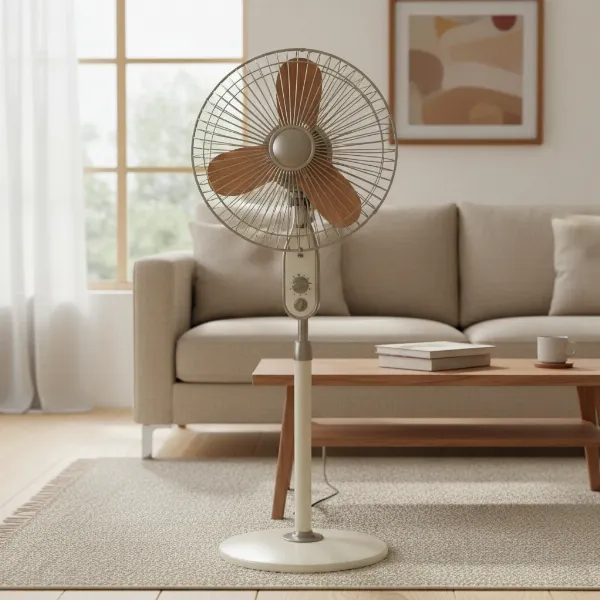 Traditional AC motor fan with visible motor housing and limited speed controls
Understanding DC Motor Fans
DC motor fans represent a more recent innovation in fan technology, gaining significant popularity for their advanced performance and efficiency. Unlike AC fans, DC fans operate on direct current. Since household electricity is supplied as AC, these fans incorporate a built-in transformer to convert the alternating current from your mains into direct current before it powers the motor. This conversion process, coupled with sophisticated electronic switching and the use of permanent magnets, allows for incredibly precise control over the motor’s operation.
The most significant advantage of DC motor fans is their exceptional energy efficiency. They can consume up to 70-88% less electricity than comparable AC fans, translating into substantial long-term savings on energy bills. This efficiency stems from their simpler design, fewer components, and reduced energy loss in the form of heat. Beyond energy savings, DC fans are notably quieter, eliminating the disruptive humming noise often associated with AC motors. They also offer a wider range of speed options, typically six or more, providing granular control over airflow. Their compact and lighter motor design allows for sleeker, more modern fan aesthetics, and many come with convenient remote controls that include easy-to-use reversible functions for year-round comfort.
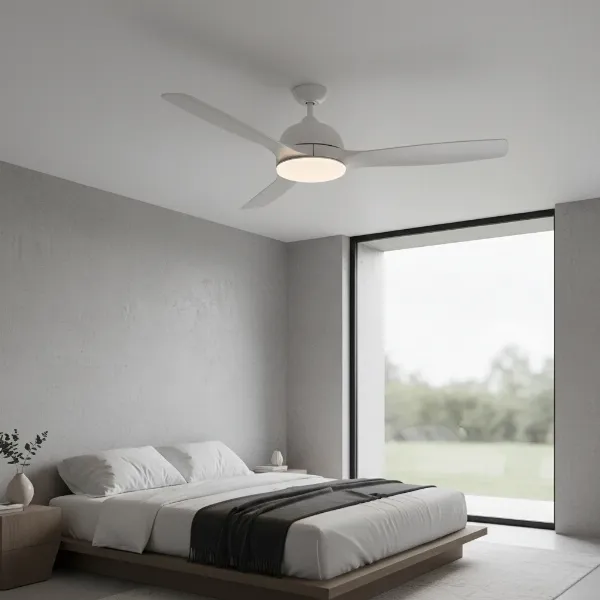 Modern DC motor fan with a sleek design, indicating energy efficiency and quiet operation in a contemporary bedroom
The Core Difference: Energy Consumption and Savings
When it comes to the primary concern of energy savings, DC motor fans are the clear frontrunner. The disparity in energy consumption is striking: a 25-watt DC fan can often produce the same airflow as a 100-watt AC fan. This impressive efficiency is not merely a marketing claim but a direct result of their innovative design. AC motors continuously reverse magnetic polarity to generate motion, which inherently leads to greater energy loss as heat. DC motors, by contrast, utilize permanent magnets and electronic commutators, allowing for more direct and efficient energy conversion to rotational force. This fundamental difference means less wasted electricity and more power channeled directly into moving air.
Over the lifetime of a fan, these energy savings accumulate significantly. While the initial investment for a DC fan might be higher, the reduced operating costs can lead to a quicker payback period and considerable savings on utility bills, especially in regions with higher electricity prices or for fans used frequently. This makes DC fans a compelling choice for environmentally conscious consumers and those prioritizing long-term financial benefits.
Beyond Energy: A Comprehensive Comparison
While energy efficiency is a major deciding factor, several other aspects differentiate AC and DC motor fans, influencing user experience and suitability for various applications.
- Noise Level: DC fans consistently outperform AC fans in terms of quiet operation. The internal workings of DC motors generate far less electromagnetic interference, eliminating the audible hum often present in AC units. This makes DC fans ideal for bedrooms, nurseries, home offices, or any space where noise reduction is paramount.
- Speed Control & Features: DC fans offer superior control and more advanced features. With typically 6 to 9-speed settings compared to the standard 3-4 on AC fans, users can fine-tune airflow to precise comfort levels. Many DC models also integrate smart features, timers, and easy-to-use remote controls that facilitate instant speed changes and seasonal direction reversal, enhancing user convenience.
- Upfront Cost vs. Long-term Value: AC fans generally have a lower initial purchase price, making them an attractive option for budget-conscious buyers. However, this upfront saving often comes at the cost of higher electricity consumption and operational expenses over the fan’s lifespan. DC fans, despite their higher initial cost, offer long-term financial benefits through significant energy savings, effectively paying for themselves over time.
- Design & Aesthetics: The compact nature of DC motors allows manufacturers greater flexibility in design. This often translates to sleeker, more minimalist fan profiles that seamlessly integrate into modern interior aesthetics, offering more choices for contemporary homes.
- Lifespan & Maintenance: Thanks to their simpler, cooler-running mechanisms, DC motors typically boast a longer operational lifespan and may require less maintenance compared to their AC counterparts, contributing to their overall value proposition.
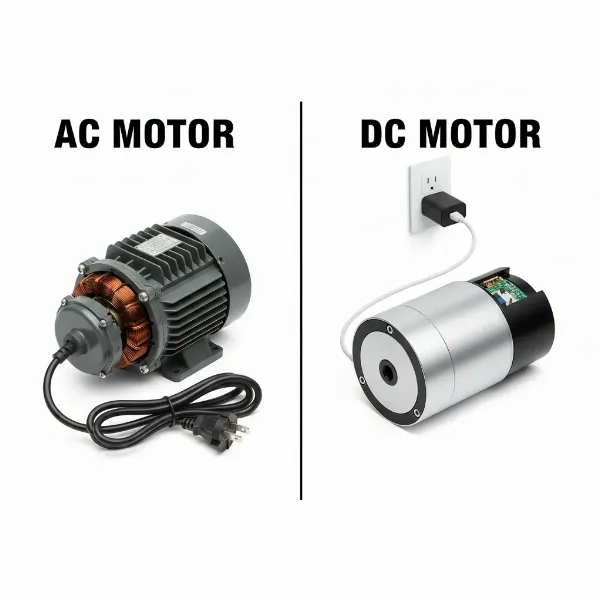 Side-by-side comparison of an AC and DC motor fan, highlighting differences in size, design, and features
Which Fan is Right for You? A Buying Guide
Choosing between an AC and DC motor fan depends on a balance of your priorities, budget, and specific needs.
- Budget: If your primary concern is the lowest possible initial cost, an AC fan will typically be more affordable upfront. However, if you’re willing to invest more initially for substantial long-term savings on electricity bills, a DC fan is the better economic choice over time.
- Room Size & Usage: AC fans can still be effective for larger spaces requiring strong, consistent airflow. For rooms where fans run for extended periods or in smaller, more personal spaces, a DC fan’s efficiency becomes invaluable.
- Noise Sensitivity: For bedrooms, studies, offices, or any area where quiet operation is crucial, the virtually silent performance of a DC fan is a significant advantage.
- Feature Preferences: If you value precise control, multiple speed settings, remote operation, and advanced functionalities like timers and easy directional changes, DC fans offer a richer feature set.
- Environmental Impact: For those prioritizing eco-friendliness and reducing their carbon footprint, the lower energy consumption of DC fans makes them the more sustainable choice.
Tips for Maximizing Fan Efficiency
Regardless of whether you choose an AC or DC fan, a few practices can help optimize their performance and energy consumption:
- Strategic Placement: Position fans to create a cross-breeze, pushing hot air out and drawing cooler air in.
- Sensible Speed Settings: Use lower speed settings whenever possible. Fans consume significantly less energy at lower speeds.
- Regular Cleaning: Dust and grime on blades and motor housings can impede airflow and force the motor to work harder, reducing efficiency. Clean your fan regularly.
- Pair with Air Conditioning: Fans are excellent companions to air conditioning. Use a fan to circulate cool air, allowing you to set your thermostat a few degrees higher and reduce AC energy usage.
Conclusion
In the perennial debate of AC vs. DC motor fans, DC technology emerges as the undisputed champion for energy efficiency, quiet operation, and advanced user control. While AC fans maintain a place in the market due to their lower initial cost and proven reliability, the long-term savings, enhanced comfort, and sophisticated features of DC fans present a compelling argument for their adoption. By considering your specific needs, budget, and priorities, you can make an informed decision that ensures optimal cooling comfort while contributing to lower energy bills and a greener lifestyle. Which motor type will power your comfort this season?
Frequently Asked Questions
How much energy do DC fans actually save compared to AC fans?
|
Our Picks for the Best electric fan in 2026
As an Amazon Associate I earn from qualifying purchases.
|
||
| Num | Product | Action |
|---|---|---|
| 1 | Dreo Tower Fan for Bedroom, 90° Oscillating Standing Fans for Room with 4 Speeds, 3 Modes, 28dB Quiet for Sleep, 25ft/s Velocity, 8H Timer, Remote, Living Room, Office, Home, Black |

|
| 2 | Amazon Basics 20\" High Velocity Industrial Fan, Floor Fan, with 3 Speeds, Tilt Head, ETL-Listed Safety Compliance, Metal Housing/Blades, Ideal for Industrial/Commercial Space/Garage/Gym, 125W, Black |
|
| 3 | Dreo Fan for Bedroom, 12 Inches, 70ft Powerful Airflow, 28db Quiet Table Air Circulator Fans for Whole Room, 120° Adjustable Tilt, 3 Speeds, Desktop Fan for Home, Office, Kitchen |
|
| 4 | Lasko 2520 Oscillating Stand Fan,White 16 Inch |
|
| 5 | Dreo Tower Fan for Bedroom, 25ft/s Velocity Quiet Floor Fan, 90° Oscillating Fans for Indoors with 4 Speeds, 4 Modes, 8H Timer, Standing Fans, Bladeless Fan, Black, Nomad One (DR-HTF007) |
|
| 6 | Amazon Basics 16\" Pedestal Fan with Remote, Floor Fan, Standing Fan for Bedroom, Living Room, Office, with 3 Speeds, 3 Modes, Timer, Dual-Layered Blades, Adjustable Height, Tilt Head, 60W, Black |
|
| 7 | Dreo Fan for Bedroom, 120° Oscillating Standing Fans, Quiet Floor Fan with DC Motor, 100ft Pedestal Fans for Room, 9 Speeds, 4 modes, 20dB, 120° Manual Vertical, 37-42\" Adjustable Height, 9H Timer |
|
| 8 | Amazon Basics Air Circulator Fan, Desk Fan for Bedroom, Home and Office, With 90-Degree Tilt Head, 3 Speed Settings, Lightweight (3 LBS), 35 Watts, Black, 11.1\"W x 6.3\"D x 10.9\"H |
|
| 9 | LEVOIT Tower Fan for Bedroom, 25ft/s Velocity Standing Fan with 28dB Quiet for Sleep, Remoter, 12H Timer, 5 Speeds, 4 Modes, 90° Oscillation for Home, Office, Indoor, Bladeless 36 inch, White |
|
| 10 | 10\" Modern Standing Fan for Bedroom, Sleek Oscillating Pedestal Fan, 3-Speed & Height Adjustable Compact Floor Fan for Home Office & Dorm |
|
DC motor fans typically save between 50% and 88% more energy than AC fans of comparable size and output. For instance, a DC fan might consume only 25 watts to achieve the same airflow as a 100-watt AC fan, leading to significant savings over time.
Are DC fans worth the extra initial cost?
While DC fans generally have a higher upfront price, their substantial energy savings over their lifespan often lead to a quicker return on investment and lower overall operating costs, making them a worthwhile long-term investment for many consumers.
Do AC fans have any significant advantages over DC fans?
AC fans typically boast a lower initial purchase price, making them more accessible for budget-conscious buyers. They are also known for their robust, traditional design and ability to generate strong, consistent airflow, which can be beneficial in certain larger spaces.
What causes the “hum” often heard in AC fans?
The “hum” in AC fans is primarily caused by electromagnetic interference within the motor as the alternating current continuously changes direction. DC motors, with their different operational principles involving permanent magnets and electronic switching, largely eliminate this noise.