Stepping out of a hot shower only to find your bathroom mirror completely fogged up and damp surfaces everywhere is a common experience. But this lingering moisture isn’t just an annoyance; it’s a prime breeding ground for mold and mildew. These unwelcome guests can not only compromise your home’s air quality and lead to unsightly stains but also pose potential health risks. Choosing the right bathroom exhaust fan is your most powerful weapon against this pervasive problem, transforming your damp bathroom into a dry, healthy haven.
Understanding Bathroom Mold and Why Ventilation Matters
Mold is a tenacious adversary, thriving in environments rich with warmth and moisture. Bathrooms, with their daily deluge of steam from showers and baths, offer the ideal conditions for mold spores to proliferate on walls, ceilings, grout, and even hidden corners. Once established, mold can be notoriously difficult to eradicate and can trigger allergies, asthma, and other respiratory issues, while also causing structural damage to your home over time.
This is where an effective bathroom exhaust fan becomes indispensable. Its primary function is to actively pull humid, moisture-laden air from inside your bathroom and expel it outdoors, preventing condensation and lowering overall humidity levels. By creating a consistent exchange of air, these fans ensure surfaces dry quickly, depriving mold spores of the essential moisture they need to grow and spread. Beyond mold prevention, a good exhaust fan also works diligently to eliminate unpleasant odors, significantly improving the indoor air quality and comfort of your bathroom space.
Types of Bathroom Exhaust Fans
The world of bathroom exhaust fans offers several options, each with distinct advantages depending on your bathroom’s layout and your specific needs. Understanding the differences will help you make an informed choice.
Ceiling-Mounted Fans
Ceiling-mounted fans are the most common type and are installed directly into your bathroom ceiling, connecting to ductwork that vents outside. They are typically chosen for their discreet appearance and efficient performance, effectively drawing steam and odors upwards and out of the room.
- Pros: Generally powerful and efficient at removing moisture, can be very quiet with low sone ratings, and often come with integrated features like lights or heaters. They offer a clean, integrated look.
- Cons: Installation can be more complex, especially for new installations that require cutting into the ceiling and running ductwork through an attic or floor joists.
- When to Use: Ideal for most standard bathrooms, especially those on upper floors with attic access, where direct venting through the roof or a side wall is feasible. They are a go-to for comprehensive moisture removal.
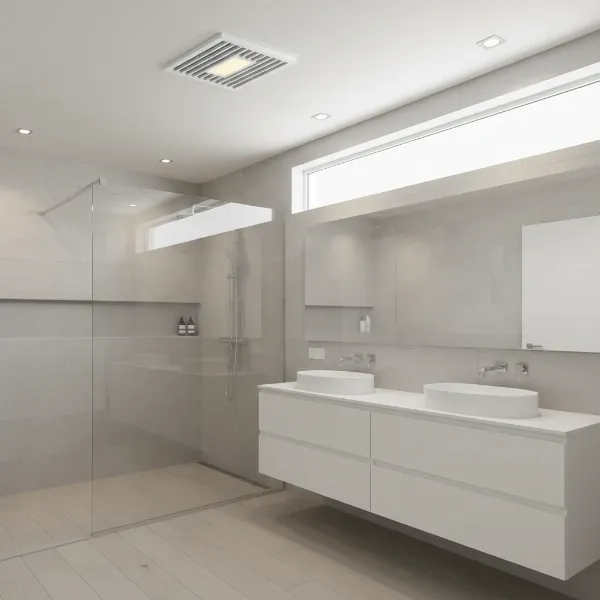 Modern ceiling-mounted exhaust fan with integrated LED light for bathroom ventilation
Wall-Mounted Fans
Wall-mounted fans are installed directly into an exterior wall, offering a simpler installation process compared to ceiling models, as they don’t require extensive ductwork through attics.
- Pros: Easier to install, particularly if you’re replacing an existing wall-mounted unit or if attic access is limited. They are often a good solution for basement bathrooms or those in structures without an accessible attic space.
- Cons: Their placement on an exterior wall might limit their aesthetic integration into some bathroom designs. Their effectiveness can sometimes be less than ceiling-mounted units if the primary source of steam (e.g., shower) is far from the wall.
- When to Use: Best suited for bathrooms with an exterior wall where direct venting is straightforward, or in spaces with low ceilings where a ceiling-mounted fan isn’t practical.
Inline/Duct Fans
Inline fans are mounted within the ductwork, often in an attic or a joist space, rather than directly in the bathroom ceiling. A grille is visible in the bathroom, but the fan motor itself is remote.
- Pros: Exceptionally quiet because the motor is located away from the living space, allowing for more powerful fan motors without the associated noise. They can also be used to ventilate multiple areas (e.g., a toilet room and a main bathroom area) with a single fan unit.
- Cons: Installation is generally more complex and often requires professional help due to the remote mounting and ducting requirements. Higher initial cost.
- When to Use: Perfect for those prioritizing ultra-quiet operation, larger bathrooms needing significant air movement, or designs that require ventilation from multiple points within a single bathroom or adjacent areas.
Key Features for Optimal Mold Prevention
When choosing a bathroom exhaust fan, several features directly impact its ability to combat mold effectively. Prioritizing these will ensure you select a fan that meets your specific needs.
CFM Rating: Power and Size Match
CFM, or Cubic Feet per Minute, measures the volume of air an exhaust fan can move in one minute. This is arguably the most critical specification for mold prevention, as it directly relates to the fan’s power to clear humid air. A general rule of thumb for bathrooms under 100 square feet with an 8-foot ceiling is to aim for at least 1 CFM per square foot of bathroom area. For example, a 70 sq ft bathroom needs a minimum of 70 CFM. Larger bathrooms, or those with higher ceilings and multiple water fixtures (like a large tub, shower, and multiple sinks), will require a higher CFM to adequately remove moisture and prevent mold growth. Insufficient CFM means moisture lingers, creating a breeding ground for mold.
Sone Level: For Quiet Operation
The sone rating indicates the noise level of an exhaust fan. A lower sone number signifies quieter operation. For comparison, 1 sone is roughly the sound of a refrigerator running. Many homeowners prioritize a quiet fan for comfort and privacy. Fans with ratings between 0.3 and 1.0 sones are considered ultra-quiet, making them ideal for residential bathrooms. Moderate noise levels fall between 1.5 and 3.0 sones, while anything above 4.0 sones is generally considered loud. While noise doesn’t affect mold prevention directly, a quiet fan ensures you’ll actually use it consistently, which is key to humidity control.
Humidity Sensors: Automatic Moisture Control
Modern bathroom exhaust fans often come equipped with humidity sensors, also known as humidistats. These smart devices automatically detect when the moisture level in the bathroom exceeds a preset threshold (typically around 60% relative humidity) and switch the fan on. Once the humidity drops back to an acceptable level, the fan turns off. This feature is a game-changer for mold prevention because it eliminates the guesswork and ensures continuous, appropriate ventilation, even if you forget to turn the fan on or leave it running too long. It’s especially useful in homes with children or guests who might not be diligent about fan usage.
Timers: Ensuring Complete Ventilation
Another valuable feature for effective mold prevention is an integrated timer. Rather than manually turning the fan off, a timer allows you to set the fan to run for a specific duration (e.g., 15, 30, or 60 minutes) after you’ve left the bathroom. This ensures that all residual moisture, particularly after a long, hot shower, is fully exhausted, preventing condensation from settling on surfaces. Combining a timer with a humidity sensor offers the ultimate automatic moisture control.
 Sparkling clean, dry, and mold-free modern bathroom after effective ventilation
Integrated Lighting and Other Smart Features
Beyond their primary ventilating role, many exhaust fans offer additional conveniences. Integrated LED lighting is a popular feature, providing essential illumination and simplifying installation by combining two fixtures into one. Some advanced models include Bluetooth speakers for enjoying music or podcasts, nightlights, or even heaters for added warmth in colder climates. While these features don’t directly prevent mold, they enhance the overall bathroom experience and can make the fan a more desirable addition to your home.
Energy Efficiency (ENERGY STAR Rated)
Choosing an ENERGY STAR certified exhaust fan means it meets strict energy efficiency guidelines set by the EPA. These fans consume less energy, which can lead to lower utility bills over time, without compromising performance. For continuous operation, like with humidity sensors or timers, an energy-efficient model is a smart investment, minimizing your environmental impact while keeping your bathroom mold-free.
Comparison Table: Choosing the Right Fan
| Feature | Small Bathroom (<50 sq ft) | Medium Bathroom (50-100 sq ft) | Large/Master Bathroom (>100 sq ft) |
|---|---|---|---|
| Recommended CFM | 50-80 CFM | 80-110 CFM | 110-150+ CFM (or 1 CFM per sq ft) |
| Ideal Sone Level | 0.3-1.0 sones (Ultra-Quiet) | 0.3-1.0 sones (Ultra-Quiet) | 0.3-1.5 sones (Very Quiet) |
| Key Features | Basic, light, timer | Timer, humidity sensor, light | Humidity sensor, timer, smart features, light |
| Typical Price Range | $50 – $100 | $100 – $180 | $150 – $300+ |
| Performance | Efficient moisture removal | Excellent humidity control | Superior air exchange, rapid drying |
Note: For bathrooms with ceilings higher than 8 feet or steam showers, always opt for a higher CFM rating.
How to Choose the Best Bathroom Exhaust Fan (Buying Guide)
Navigating the array of options can feel overwhelming, but with a clear strategy, you can confidently select the perfect exhaust fan to banish mold from your bathroom.
Assess Your Bathroom Size and Needs
First, measure your bathroom’s square footage (length x width) to determine the minimum CFM required. Consider special circumstances like high ceilings, steam showers, or multiple water fixtures, which may necessitate a more powerful fan. Think about how much natural ventilation your bathroom currently has, such as windows, as this can influence your fan choice.
Consider Your Budget
Bathroom exhaust fans range widely in price, from budget-friendly basic models to high-end units with advanced features. While it’s tempting to opt for the cheapest option, remember that investing in a quality fan with features like humidity sensors can save you money in the long run by preventing costly mold remediation. Balance your budget with the essential features for effective mold prevention.
Prioritize Key Features
Decide which features are most important to you. Is ultra-quiet operation a must? Do you want the convenience of an automatic humidity sensor or a timer? Would integrated lighting simplify your electrical setup? Create a checklist of your desired features and narrow down your choices accordingly. Energy efficiency, indicated by an ENERGY STAR rating, is always a wise consideration.
Read Reviews and Choose Reputable Brands
Customer reviews offer valuable insights into a fan’s real-world performance, noise levels, and ease of installation. Look for consistent feedback on factors important to you. Brands like Panasonic, Broan-NuTone, and Aero Pure are frequently recommended for their reliability, quiet operation, and effective moisture removal. While product specifics vary, established brands often offer better warranties and customer support.
Understand Installation Requirements
Consider whether you’re replacing an existing fan or installing a new one. A new installation often involves running new wiring, cutting ceiling holes, and installing ductwork, which can be a complex DIY project. If you’re not comfortable with electrical work or extensive home renovation, budgeting for professional installation by an electrician or HVAC specialist is highly recommended to ensure proper venting and optimal performance. Remember, an improperly installed fan can be ineffective or even lead to new problems like mold in your attic if vented incorrectly.
Top-Rated Bathroom Exhaust Fan Brands for Mold Prevention
Several brands consistently deliver high-performance exhaust fans designed to combat moisture and prevent mold. Here are some of the most trusted names in the industry:
- Panasonic: Widely regarded as a leader in quiet and efficient ventilation, Panasonic’s Whisper series fans are a top choice. Models like the WhisperChoice DC Pick-A-Flow and WhisperSense are praised for their ultra-quiet operation (often below 0.3 sones) and effective humidity control, frequently incorporating advanced features such as humidity sensors and adjustable CFM settings.
- Broan-NuTone: A long-standing name in ventilation, Broan-NuTone offers a broad range of fans across various price points. Their models, such as the ChromaComfort and Flex series, are known for robust performance, ease of installation, and often include integrated lights, nightlights, and even anti-viral technology in some premium lines, providing strong air movement crucial for mold prevention.
- Akicon: Akicon fans are gaining recognition for their effective ventilation and quiet operation, often combining aesthetic design with practical features. The Akicon 2-Sones 110-CFM Black Decorative Lighted Bathroom Ventilator Fan, for example, is noted for its ability to clear moisture efficiently while maintaining a low noise profile.
- Aero Pure: Aero Pure specializes in sleek, modern designs with excellent performance. Many of their Designer Series fans boast low sone ratings, integrated dimmable LED lighting, and humidity sensors, making them an attractive and effective choice for contemporary bathrooms focused on both style and function.
- Delta Breeze: Known for incredibly quiet operation and energy efficiency, Delta Breeze fans, particularly their GreenBuilder series, are excellent for those who prioritize minimal noise. While some models may require specific wiring for advanced features, their ability to quietly and effectively manage humidity is highly rated.
- Air King: Air King provides a reliable range of exhaust fans with various CFM ratings suitable for different bathroom sizes. They offer solid performance and good value, with models available that include integrated lights and energy-efficient designs.
These brands represent some of the best options available for creating a consistently dry and healthy bathroom environment, crucial for long-term mold prevention.
Installation, Usage, and Maintenance Tips
Even the best bathroom exhaust fan won’t perform optimally without proper installation, consistent use, and regular maintenance. These practices are essential for long-term mold prevention.
Proper Installation: Venting Outdoors and Ductwork
The single most critical aspect of installation is ensuring the fan vents directly outside your home. Never vent into an attic, crawl space, or wall cavity. Doing so simply relocates the humid air, creating hidden moisture problems and potentially leading to severe mold growth and structural damage in those unventilated areas. Use insulated ductwork to prevent condensation within the ducts themselves, and install a backdraft damper to stop outside air from entering when the fan is off. If you’re unsure about the installation process, especially involving electrical work or cutting into your home’s structure, hiring a qualified professional is highly recommended.
Best Practices for Using Your Fan
To maximize your fan’s mold-preventing power, adopt these simple habits:
- Start Early: Turn on your exhaust fan at least 5-10 minutes before you step into the shower or bath. This creates an immediate airflow that starts removing steam as soon as it’s produced.
- Run Longer: Keep the fan running for at least 30 minutes after showering or bathing. This ensures that all lingering moisture has been effectively drawn out of the room. Many experts suggest running it for 20-30 minutes minimum. The moisture you don’t see, like condensation on cooler surfaces, can be just as problematic as visible steam.
- Use for Odors: Don’t limit fan use to showers. Turn it on whenever you need to clear odors or reduce general humidity, such as after cleaning or if the bathroom feels damp.
Regular Cleaning and Maintenance
Over time, dust, lint, and other airborne particles can accumulate on fan grilles and motor components, reducing efficiency and potentially leading to noisier operation.
- Clean the Grille: Periodically wipe down or vacuum the fan grille to remove visible dust and debris.
- Deep Clean (Annually): For a more thorough clean, carefully remove the fan cover and use a vacuum cleaner with a brush attachment to clear dust from the fan blades and interior housing. Always turn off the power to the fan at the breaker before performing any maintenance.
- Check Ductwork: Occasionally inspect the exterior vent cap to ensure it’s not obstructed by debris, bird nests, or insects. If possible, periodically check your ductwork for kinks or disconnections, which can impede airflow.
Troubleshooting Common Issues
- Fan is loud but ineffective: This could indicate clogged blades, a faulty motor, or improperly sized ductwork. Check for obstructions or consider replacing the unit if it’s old and inefficient.
- Mirror stays foggy: Your fan might be undersized for your bathroom, or it’s not being run long enough. Ensure your CFM matches your bathroom size and extend running time.
- Mold reappears: This points to inadequate moisture removal. Review your fan’s CFM, usage habits, and ensure it’s properly vented outdoors. Consider adding a humidity sensor for automatic control.
By following these guidelines, your bathroom exhaust fan will serve as a vigilant guardian against mold, ensuring a drier, healthier, and more pleasant bathroom environment for years to come.
Conclusion
Preventing mold in your bathroom is not just about aesthetics; it’s about safeguarding your home’s structure and your family’s health. The right bathroom exhaust fan stands as your first line of defense, diligently working to whisk away moisture and maintain optimal air quality. By understanding the critical role of CFM and sone ratings, embracing smart features like humidity sensors and timers, and committing to proper usage and maintenance, you empower your home with continuous protection. Investing in a high-quality, energy-efficient exhaust fan from a reputable brand ensures that your bathroom remains a consistently dry and comfortable space, free from the worries of mold and mildew. What steps will you take today to upgrade your bathroom’s ventilation and create a healthier home environment?
Frequently Asked Questions
How long should I run my bathroom exhaust fan after a shower?
You should run your bathroom exhaust fan for at least 30 minutes after every shower or bath. This extended running time ensures that all residual moisture and humidity have been thoroughly removed from the air and off surfaces, significantly reducing the risk of mold and mildew growth.
What CFM do I need for my bathroom?
A good rule of thumb is to have at least 1 CFM (Cubic Feet per Minute) per square foot of bathroom area for bathrooms under 100 square feet. For example, a 75 sq ft bathroom needs a minimum 75 CFM fan. For larger bathrooms, or those with high ceilings or multiple fixtures, a higher CFM (110-150+ CFM) will be necessary to ensure effective ventilation.
Can a noisy bathroom fan still prevent mold effectively?
Yes, a noisy bathroom fan can still prevent mold effectively if it has a sufficient CFM rating for your bathroom size and is properly installed. The noise level (sone rating) primarily affects user comfort, not the fan’s ability to move air. However, a quieter fan might encourage more consistent use, which is beneficial for mold prevention.
Is it necessary to vent a bathroom exhaust fan outside?
Absolutely, it is crucial to vent a bathroom exhaust fan directly to the outside of your home. Venting humid air into an attic, wall cavity, or crawl space will trap moisture in those areas, inevitably leading to hidden mold growth, insulation damage, and potentially severe structural problems. Proper ductwork ensures the moisture is completely expelled.
Do humidity sensor fans really help prevent mold?
Yes, humidity sensor fans are highly effective in preventing mold. They automatically detect when moisture levels in your bathroom rise above a predetermined threshold and activate the fan, ensuring ventilation even if you forget to turn it on. This consistent, automated moisture control is a powerful tool against mold growth.
How often should I clean my bathroom exhaust fan?
You should clean the grille of your bathroom exhaust fan regularly, such as monthly, to remove dust and debris. A deeper cleaning of the fan blades and interior housing, after turning off the power, is recommended at least once or twice a year to maintain optimal airflow and efficiency.