Stepping into a home filled with lingering cooking odors can quickly turn a culinary triumph into a persistent nuisance. Whether it’s the strong aroma of garlic from last night’s stir-fry or the greasy scent of breakfast bacon, unwanted kitchen smells can permeate your entire living space. A high-quality kitchen exhaust fan isn’t just an appliance; it’s an essential ventilation system designed to keep your air fresh, your kitchen clean, and your home comfortable. This comprehensive guide will walk you through everything you need to know to choose, use, and maintain the best kitchen exhaust fan for your needs, ensuring a pleasant cooking environment free from persistent odors.
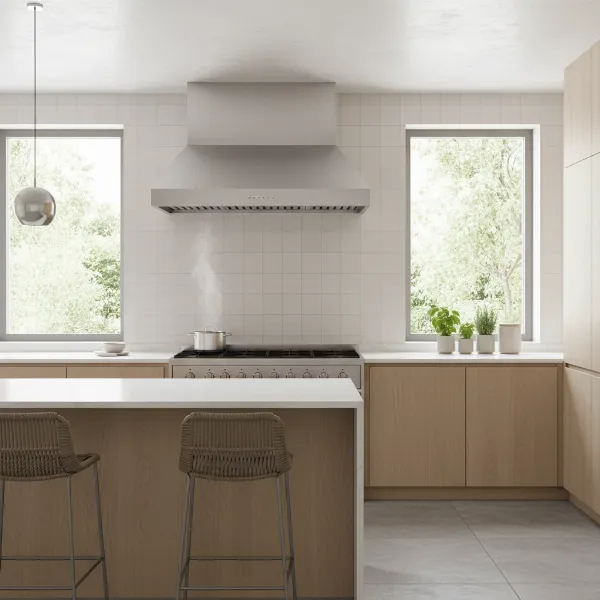 A modern kitchen with a sleek, powerful exhaust fan integrated above a cooktop, ensuring fresh air.
Common Types of Kitchen Exhaust Fans
Choosing the right kitchen exhaust fan begins with understanding the various types available and how they integrate into different kitchen layouts. Each style offers unique advantages in terms of aesthetics, performance, and installation.
Under-Cabinet Range Hoods
Under-cabinet range hoods are among the most common and practical choices, mounting directly beneath existing cabinetry above the cooktop. They are designed to save space and often come in both ducted and ductless (recirculating) configurations.
- Pros: Space-saving, often more affordable, straightforward installation, suitable for smaller kitchens.
- Cons: May offer lower CFM (Cubic Feet per Minute) compared to other types, can be less visually striking.
- When to Use: Ideal for compact kitchens, apartments, or homes where existing cabinetry provides a natural mounting point, and a balance of efficiency and discreet design is desired. They are particularly good for home cooks who prepare everyday meals without excessive smoke or strong odors.
Wall-Mount Range Hoods
Wall-mount range hoods, also known as chimney hoods, are affixed directly to the wall above the cooktop, extending upwards like a chimney. They are often a focal point in the kitchen design.
- Pros: Powerful ventilation (typically higher CFM), visually appealing, available in various stylish designs, effective for heavy cooking.
- Cons: Requires dedicated wall space, can be more expensive, usually ducted, demanding professional installation for optimal performance.
- When to Use: Best suited for open-concept kitchens or those with professional-style ranges where the hood can serve as a design statement. They excel at handling significant smoke, steam, and intense cooking odors.
Island Range Hoods
Designed specifically for kitchen islands with cooktops, island range hoods hang from the ceiling above the cooking surface. They are engineered for 360-degree capture since they are not supported by walls.
- Pros: Creates a striking focal point, highly effective for island cooking, strong ventilation power.
- Cons: Generally the most expensive type, installation is more complex (requiring ceiling structural support and ductwork), can be visually imposing in smaller spaces.
- When to Use: Essential for kitchens with island cooktops, especially in open-concept designs where cooking is often a social activity. These hoods require robust performance to capture odors efficiently from all sides.
Insert Range Hoods
Insert range hoods, or power packs, are ventilation units that are built into custom cabinetry or a decorative hood shell. This allows for a completely integrated and customized look.
- Pros: Seamlessly blends with kitchen aesthetics, customizable design options, often very powerful, allows for personalized styling.
- Cons: Can be more expensive due to custom cabinetry work, installation requires careful planning and skilled craftsmanship.
- When to Use: Perfect for homeowners and designers seeking a minimalist or bespoke kitchen appearance, where the ventilation system needs to be powerful but hidden from view.
Downdraft Ventilation Systems
Downdraft systems are unique in that they rise from behind or beside the cooktop when in use and retract flush with the counter when not needed. They pull smoke and odors downwards rather than upwards.
- Pros: Excellent for minimalist kitchens, disappears when not in use, frees up overhead space.
- Cons: Less effective at capturing rising heat and steam compared to overhead hoods, typically lower CFM, can take up valuable cabinet space below the counter.
- When to Use: A great option for island cooktops or kitchens where overhead ventilation isn’t feasible or desired. They work particularly well with electric or induction cooktops, where less heat rises.
Comparison Table of Kitchen Exhaust Fans
| Feature | Under-Cabinet Hoods | Wall-Mount Hoods | Island Hoods | Insert Hoods | Downdraft Systems |
|---|---|---|---|---|---|
| Price Range | Entry to Mid-range | Mid to High-end | High-end | Mid to High-end (plus custom work) | Mid to High-end |
| Airflow (CFM) | 150-400 CFM | 300-900+ CFM | 300-1200+ CFM | 300-1200+ CFM | 200-600 CFM |
| Noise Level (Sones) | 3-8 Sones | 2-7 Sones | 2-8 Sones | 2-7 Sones | 4-10 Sones |
| Ventilation Type | Ducted or Ductless | Primarily Ducted | Primarily Ducted | Primarily Ducted | Ducted or Ductless |
| Best For | Small kitchens, budget-aware | Statement piece, heavy cooking | Island cooktops, open layouts | Custom kitchens, hidden ventilation | Minimalist design, electric cooktops |
| Installation | Relatively Easy | Moderate to Complex | Complex (ceiling support required) | Complex (custom cabinet work) | Moderate to Complex (under-counter) |
Key Features to Consider When Buying a Kitchen Exhaust Fan
Choosing the right kitchen exhaust fan involves more than just picking a style. Several critical features directly impact its performance in removing cooking smells, smoke, and grease.
Airflow Capacity (CFM)
CFM, or Cubic Feet per Minute, measures how much air a range hood can move in one minute. A higher CFM indicates a more powerful fan, which is crucial for effective odor removal.
- General Guidelines:
- Kitchen Size: A basic rule of thumb suggests at least 1 CFM per square foot of kitchen space. For example, a 100 sq ft kitchen would need a minimum of 100 CFM.
- Stove Width: Aim for at least 100 CFM per linear foot of stove width. A 30-inch (2.5-foot) stove would require at least 250 CFM.
- Gas Cooktops: Gas ranges generate more heat and fumes than electric ones. For high-output gas ranges, a minimum of 1 CFM per 100 BTUs (British Thermal Units) of burner output is recommended. For instance, a cooktop with a total of 40,000 BTUs would need at least 400 CFM.
- Cooking Style:
- Light Cooking (Boiling, Baking): 200-300 CFM is often sufficient.
- Moderate Cooking (Sautéing, Stir-Frying): Consider 300-400 CFM.
- Heavy Cooking (Frying, Grilling, Wok Cooking): Opt for 600+ CFM for maximum effectiveness against strong odors and grease.
- Ductwork Impact: For ducted systems, consider adding CFM to compensate for duct length and bends. Add 1 CFM for every foot of duct pipe, 25 CFM for each 90-degree elbow turn, and 40 CFM for the external vent cap.
Noise Level (Sones)
The noise level of a range hood is measured in sones, a unit that reflects how sound is perceived by humans. Lower sone ratings indicate quieter operation.
- Understanding Sones: 1 sone is roughly equivalent to the sound of a refrigerator running. A typical conversation is between 1 and 4 sones. Many range hoods operate between 6 and 10 sones (53 to 61 decibels).
- Balancing Power and Quiet: While higher CFM often correlates with louder operation, many manufacturers offer models designed for quiet efficiency, even at higher speeds. Look for models with insulated motors or external blowers for reduced kitchen noise.
Ventilation Type: Ducted vs. Ductless
This is a fundamental choice impacting the effectiveness of odor removal.
- Ducted (External Venting): These systems pull contaminated air, smoke, and odors directly out of your home through a system of ducts to an exterior vent.
- Pros: Most effective for complete odor, smoke, and grease removal; significantly improves indoor air quality.
- Cons: Requires ductwork installation (which can be complex and costly), needs an exterior wall or roof access.
- Ductless (Recirculating): These hoods filter the air through charcoal or carbon filters to remove odors and grease, then recirculate the “cleaned” air back into the kitchen.
- Pros: Easier and less expensive to install (no ductwork required), more flexible placement.
- Cons: Less effective at removing strong odors, steam, and heat; filters require regular cleaning or replacement (typically every few months for heavy users); recirculates air rather than truly removing pollutants.
- Convertible: Some models offer the option for both ducted and ductless operation, providing flexibility. Note that a recirculation kit (with charcoal filters) is often sold separately for convertible models.
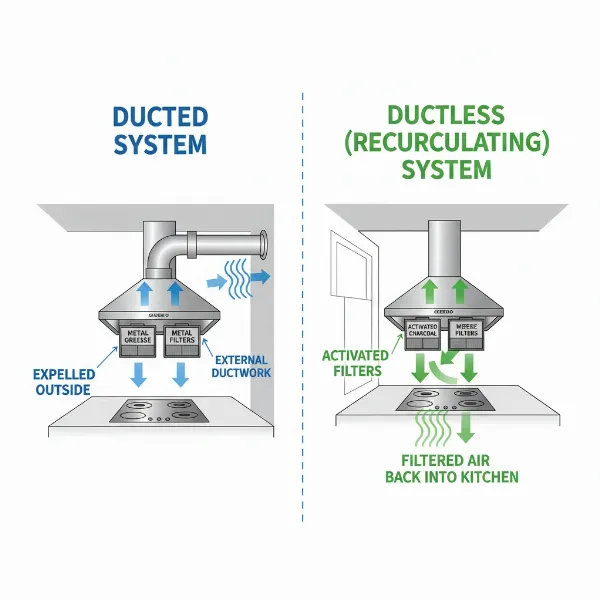 Diagram comparing ducted and ductless kitchen exhaust fan systems, showing air paths and filters.
Size and Coverage
For optimal performance, the range hood should be appropriately sized for your cooktop and cooking area.
- Width: The hood should be at least as wide as your cooking surface. Ideally, it should extend 3 inches beyond the cooktop on each side to maximize capture area, especially for island hoods or high-performance cooking.
- Mounting Height: Generally, range hoods should be installed 24-30 inches above an electric cooktop and 24-36 inches above a gas cooktop. Always consult the manufacturer’s specific recommendations.
Filters
Filters are crucial for trapping grease, odors, and other airborne particles.
- Mesh Filters: Commonly made of aluminum, these trap grease effectively and are often dishwasher-safe for easy cleaning.
- Baffle Filters: Made of stainless steel, baffle filters use interlocking panels to create a labyrinth that captures grease more efficiently. They are common in commercial settings and increasingly popular residentially, offering excellent grease capture and airflow. They are also typically dishwasher-safe.
- Charcoal/Carbon Filters: Used in ductless (recirculating) hoods to absorb odors. These require regular replacement as they become saturated over time.
Controls and Lighting
Modern range hoods offer a variety of controls and lighting options for convenience and functionality.
- Controls: From traditional push buttons and rocker switches to sleek touch controls and digital panels, the choice is often a matter of personal preference. Some high-end models feature automatic speed control, which adjusts fan power based on detected heat or smoke.
- Lighting: Built-in lighting, often LED, halogen, or incandescent, illuminates the cooktop for better visibility while cooking. LED lights are energy-efficient and long-lasting. Some models include dimmer settings or night light functions.
Smart Features and Make-Up Air
- Smart Technology: Higher-end models may offer Wi-Fi connectivity, app control, or integration with smart home systems, allowing remote operation or scheduling.
- Make-Up Air Systems: For powerful range hoods (often above 400 CFM, depending on local codes), a make-up air system may be required. As the hood exhausts a large volume of air, it creates negative pressure. A make-up air system passively or actively brings in fresh air from outside to balance the pressure, preventing issues like backdrafting from other appliances (e.g., furnaces, water heaters) and ensuring proper ventilation. This can be an additional installation cost.
Kitchen Exhaust Fan Buying Guide
Navigating the market for a new kitchen exhaust fan can be overwhelming. Follow these steps to make an informed decision that suits your home and cooking habits.
- Determine Your Needs:
- Cooking Style: Do you lightly simmer or frequently fry, grill, or use high-heat cooking methods that produce a lot of smoke and strong odors? This will dictate the CFM you require.
- Kitchen Layout: Consider your stove’s location (against a wall, on an island, under cabinets) to determine the appropriate mounting type.
- Ventilation Preference: Can you install a ducted system, or is a ductless (recirculating) model your only option? Ducted systems are always preferred for maximum odor removal.
- Set a Budget: Kitchen exhaust fans vary widely in price, from a few hundred dollars for basic under-cabinet models to several thousands for high-CFM island or custom insert hoods. Factor in installation costs, especially for ducted systems or custom work.
- Research Reputable Brands: Brands like Broan-NuTone, Cosmo, KitchenAid, Zephyr, and Vent-A-Hood are known for their quality and range of products. Look for manufacturers with a good track record and positive customer feedback.
- Read User Reviews: Real-world experiences can offer valuable insights into performance, noise levels, ease of cleaning, and durability. Pay attention to comments related to odor removal effectiveness.
- Check Warranty and Return Policies: A good warranty provides peace of mind. Understand the manufacturer’s warranty terms and the retailer’s return policy before making a purchase.
- Consult Professionals: For complex installations, high-CFM units, or custom designs, consult with a kitchen designer, contractor, or HVAC specialist to ensure proper sizing, ductwork, and compliance with local building codes.
Top-Rated Kitchen Exhaust Fan Brands
When investing in a kitchen exhaust fan, choosing a reliable brand ensures quality and performance. Here are some top manufacturers known for their range hoods:
- Broan-NuTone: A long-standing leader in home ventilation, offering a wide range of exhaust fans from budget-friendly under-cabinet models to powerful wall-mount and insert options. They are well-regarded for their dependable performance.
- Cosmo: Known for producing stylish and functional range hoods at competitive price points. Their products often feature modern designs, good CFM, and convertible venting options.
- KitchenAid: Offers high-quality range hoods that complement their suite of kitchen appliances. Their models often include automatic features and powerful ventilation for serious home cooks.
- Zephyr: Specializes in high-performance, design-forward range hoods. Zephyr is known for innovative features, quiet operation, and elegant aesthetics, often found in upscale kitchens.
- Vent-A-Hood: A premium brand celebrated for its unique “Magic Lung” blower system, which effectively liquefies grease and removes it from the air, offering exceptional performance and durability.
- BEST: Part of the Broan-NuTone family, BEST range hoods are often praised for their strong ventilation power and effective odor removal, particularly in higher CFM models.
Tips for Using and Maintaining Your Kitchen Exhaust Fan
Proper use and regular maintenance are essential to ensure your kitchen exhaust fan continues to effectively remove cooking smells and perform optimally for years to come.
- Turn it On Before You Start Cooking: To maximize effectiveness, turn your exhaust fan on to a low setting a few minutes before you begin cooking. This establishes an airflow pattern that helps capture smoke and odors as soon as they are produced, preventing them from spreading throughout your kitchen. Increase the speed as needed for more intense cooking.
- Use the Right Fan Speed: Don’t always rely on the highest setting. Use lower speeds for light simmering and higher speeds for frying, searing, or cooking strong-smelling foods. Overusing high speeds unnecessarily can increase noise and energy consumption.
- Clean or Replace Filters Regularly:
- Mesh and Baffle Filters: These grease filters should be cleaned frequently (typically once a month, or more often with heavy use) by hand with hot, soapy water or in a dishwasher if specified by the manufacturer.
- Charcoal Filters (Ductless): These odor-absorbing filters cannot be cleaned and must be replaced every 3-6 months, depending on your cooking frequency. Failing to replace them will significantly reduce odor removal effectiveness.
- Keep the Exterior Clean: Wipe down the exterior of your range hood regularly with a mild cleaner to remove grease and grime, maintaining its appearance and preventing residue buildup.
- Inspect Ductwork (Ducted Systems): Periodically check the ductwork for any obstructions or blockages that could impede airflow. Professional duct cleaning may be necessary every few years, especially for heavy cooks.
- Address Issues Promptly: If you notice a decrease in performance, unusual noises, or persistent odors even with the fan on, consult the owner’s manual for troubleshooting or contact a professional for service. Common issues can include clogged filters, motor problems, or duct obstructions.
Conclusion
A well-chosen kitchen exhaust fan is a vital investment for any home, transforming your cooking experience by efficiently eliminating unwelcome odors, smoke, and grease. By understanding the different types, considering crucial features like CFM and ventilation style, and committing to regular maintenance, you can ensure your kitchen remains a fresh, clean, and inviting space for all your culinary adventures. Don’t let cooking smells dictate the comfort of your home; empower your kitchen with the right ventilation solution. What culinary creations will you confidently tackle next, knowing your kitchen air will stay pristine?
Frequently Asked Questions
What CFM do I need for my kitchen exhaust fan?
The ideal CFM depends on your kitchen size, stove type (gas vs. electric), and cooking habits. A general guideline is 100 CFM per linear foot of stove width. For heavy cooking or gas ranges, you may need 350-600+ CFM to effectively remove strong odors and smoke.
Is a ducted or ductless range hood better for removing cooking smells?
Ducted range hoods are significantly more effective for removing cooking smells because they vent contaminated air directly outside your home. Ductless models filter and recirculate air, which can reduce odors but do not eliminate them as thoroughly as ducted systems.
How often should I clean my range hood filters?
Mesh and baffle grease filters should be cleaned approximately once a month, or more frequently if you cook often or prepare greasy foods. Charcoal filters in ductless hoods need to be replaced every 3 to 6 months to maintain odor-absorbing efficiency.
How high should I mount my kitchen exhaust fan above the stove?
The recommended mounting height for a kitchen exhaust fan is typically between 24 and 30 inches above an electric cooktop and 24 to 36 inches above a gas cooktop. Always refer to your specific model’s installation manual for precise recommendations.
Do I need a make-up air system for my kitchen exhaust fan?
If your range hood has a high CFM (often exceeding 400 CFM, depending on local building codes), you might need a make-up air system. This system introduces fresh air to balance the air pressure in your home, preventing issues that can arise from powerful exhaust systems in tightly sealed homes.
Can a kitchen exhaust fan help with grease buildup?
Yes, a good kitchen exhaust fan is highly effective at capturing airborne grease particles before they settle on kitchen surfaces, protecting your cabinetry and reducing the frequency of deep cleaning required in your kitchen.