Introduction: Why noisy fans are annoying and how this guide will help. Importance of a quiet fan.
Identifying the Source: Common Ceiling Fan Noises and Their Meanings
- Clicking/Ticking: Often loose screws or obstructions.
- Grinding/Squeaking: Typically dry motor bearings or worn components.
- Humming/Buzzing: Electrical issues, dimmer switches, or capacitor problems.
- Wobbling/Rattling: Unbalanced blades, loose mounting, or light kit issues.
- Rubbing: Misaligned components, often blade holders.
- Crackling/Sizzling: Serious electrical fault – immediate action needed.
Essential Tools and Safety Precautions
- Tools: Screwdrivers (various types), ladder, cleaning supplies (cloth, compressed air), balancing kit, fan oil (synthetic motor oil 5W30 or specific fan oil), multimeter (optional for electrical checks).
- Safety: Crucial step: Turn off power at the circuit breaker. Verify power is off.
Step-by-Step Troubleshooting and Fixes for Your Noisy Ceiling Fan
1. Tighten All the Screws
- Blades and Blade Holders: Check all screws connecting blades to blade holders, and blade holders to the motor.
- Motor Housing and Canopy: Secure screws on the motor housing, downrod, and ceiling canopy.
- Light Kit and Glass Shades: Tighten any screws on the light fixture, ensure glass shades are snug.
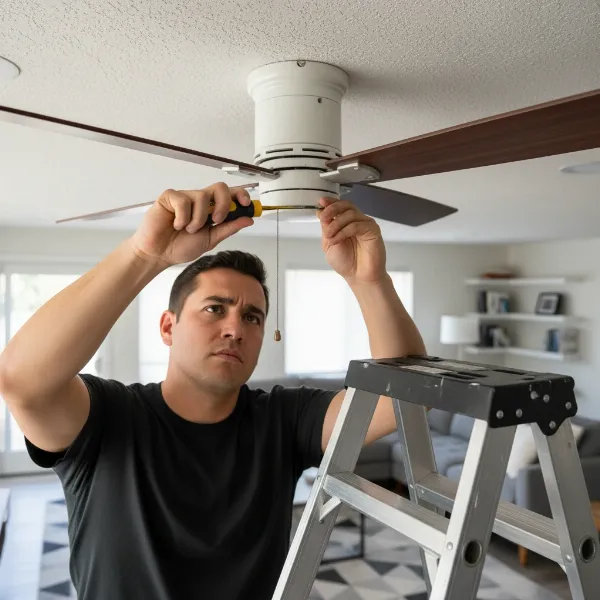 A person on a ladder tightening screws on a ceiling fan blade holder, ensuring stability.
2. Address Blade Wobble
- Inspect Blades: Check for bent or warped blades.
- Balance Kit: Use a ceiling fan blade balancing kit to identify and correct imbalances.
- Blade Alignment: Ensure blades are at the same height from the ceiling.
3. Lubricate the Motor Bearings
- Locate Oil Ports: Identify oil holes (often small, near the top of the motor housing or downrod).
- Apply Oil: Use a few drops of approved fan oil (e.g., non-detergent 5W30 motor oil). Caution: Do not use WD-40.
- Regular Maintenance: Suggest annual oiling for older fans.
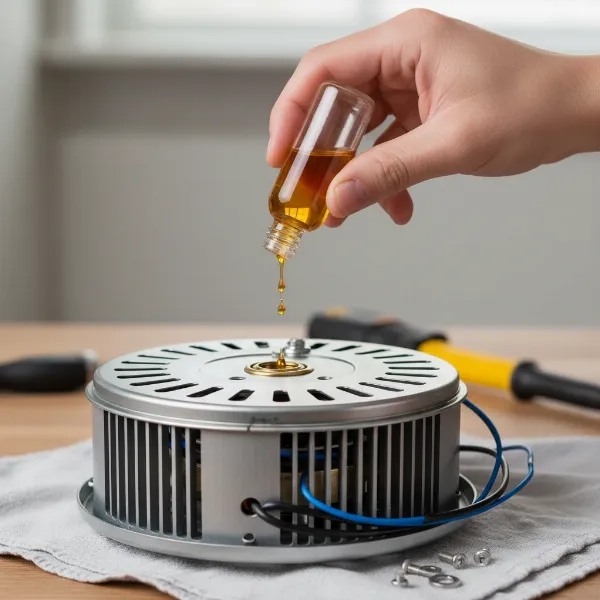 Close-up of hand applying drops of synthetic oil into a ceiling fan motor's oil port.
4. Clean Away Dust and Debris
- Power Off First: Always disconnect power.
- Clean Blades: Wipe down blades.
- Internal Cleaning: Gently clean inside the motor housing with compressed air or a soft brush to remove dust accumulation.
5. Check Electrical Components
- Dimmer Switches and Fan Controls: Ensure fan-specific dimmer switches or compatible controls are used. Standard light dimmers can cause humming.
- Capacitor Inspection: Explain signs of a faulty capacitor (bulging, leaking).
- Wiring Connections: Briefly mention checking for loose wires in the switch box or canopy (emphasize professional help if unsure).
6. Inspect Mounting and Installation
- Secure Ceiling Mount: Verify the mounting bracket is firmly attached to the ceiling joist/electrical box.
- Downrod and Ball Joint: Ensure the downrod is securely fastened and the ball joint is seated correctly in the hanger bracket.
- Blade Holder Orientation: Confirm blade holders are installed correctly as per the manual.
When to Call a Professional or Consider Replacement
- Persistent Issues: If DIY troubleshooting fails.
- Electrical Concerns: Crackling, sizzling, burning smells, complex wiring issues.
- Worn Motor Bearings: Beyond simple lubrication, if bearings are truly failing.
- Age of Fan: Older fans may be more prone to issues; replacement might be cost-effective.
Preventative Maintenance Tips for a Quiet Ceiling Fan
- Regular cleaning.
- Annual lubrication (if applicable).
- Periodic screw checks.
- Using compatible fan controls.
Conclusion: Recap key steps, emphasize safety and patience. Encourage readers to enjoy their quiet space.
Frequently Asked Questions (FAQ)
What kind of oil do I use for a noisy ceiling fan motor?
Can a dirty ceiling fan cause noise?
Why is my ceiling fan wobbling and making noise?
Is it normal for a ceiling fan to hum?
When should I replace a noisy ceiling fan motor instead of fixing it?
Semantic Keywords: ceiling fan noise, fix noisy fan, fan motor noise, humming ceiling fan, clicking ceiling fan, wobbling fan, ceiling fan repair, lubricate fan motor, fan bearings, fan balancing kit, loose fan blades, electrical hum, ceiling fan troubleshooting.